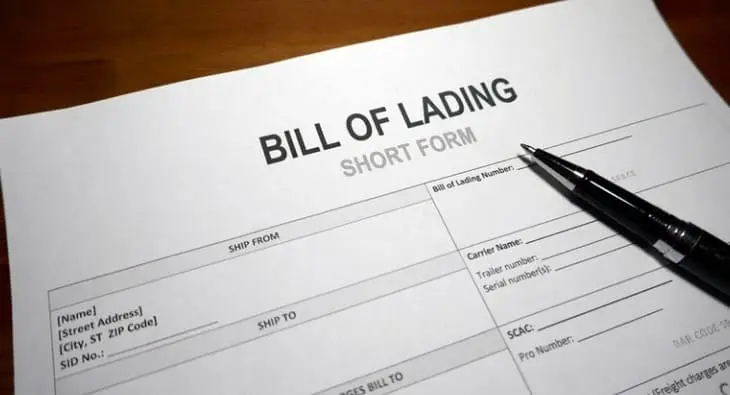
What is a Bill of Lading?
By admin
/ March 19, 2024
In the dynamic realm of international trade, the ‘bill of lading’ holds a pivotal role in ensuring the smooth transportation…
Read More

By Adarsh Gaikwad, Researcher at NITISARA
This piece looks at circular-economy supply chains and the growing recognition that what the world throws away contains some of its most strategically important materials. Recycling, reverse logistics, and urban mining have moved from environmental policy goals to core industrial strategies for nations competing to secure critical minerals. It covers battery recycling, e-waste processing, closed-loop supply systems, and the policy frameworks shaping India’s transition toward a circular economy, and asks a basic question: why does the world keep discarding materials it desperately needs, and what would it take to build supply chains that bring them back into use.
Globally, electronic waste now exceeds 60 million tonnes per year, growing at a rate five times that of formal recycling. The circular battery economy reached $26.54 billion in 2024 and is projected to exceed $56 billion by 2032. A single tonne of mobile phones contains more gold than a tonne of gold ore. Urban mining, the recovery of valuable materials from discarded products, produces aluminum and copper at costs 33-45% lower than those of primary mining. The raw materials the world needs for its clean energy future are already above ground, sitting in landfills, in obsolete electronics, and in the batteries of retired electric vehicles. These materials can already be recovered. The real question is whether the supply chains exist to do it.
The standard industrial model is linear: extract raw materials, manufacture a product, sell it, and eventually discard it. This model worked tolerably well when raw materials were abundant and cheap. It works considerably less well in a world where cobalt, lithium, nickel, and rare earth elements are simultaneously critical to the energy transition, geographically concentrated in a handful of countries, and increasingly subject to export restrictions and price volatility.
The economic logic for circularity is straightforward. Recycling lithium-ion batteries reduces energy use by 9-fold compared with primary production, lowers carbon emissions to 2.4 kg of CO2 per kilogram of material recovered, and enables up to 95% of critical materials to be reused. Closed-loop systems could meet up to 59.3% of annual cobalt demand by 2039, cutting reliance on new mining from politically volatile regions. Urban mining of aluminum and copper saves 33-45% compared with primary extraction. The case for circularity here is economic first; it just happens to line up with environmental goals, too.
The battery recycling sector sits at the most commercially interesting intersection of the circular economy. The global EV fleet is expanding rapidly, and every electric vehicle contains a lithium-ion battery with a lifespan of 8 to 15 years. The first large cohort of EVs sold in the early 2010s is now approaching the end of its life. Battery waste volumes are projected to reach 7.8 million tonnes per year by 2040. The feedstock challenge, where recycling capacity is growing faster than the current supply of end-of-life batteries, will resolve itself as that wave of retired batteries enters the market.
Governments have recognized this. The U.S. Department of Energy committed nearly $1 billion in new funding for battery recycling and critical mineral recovery in 2025. The Inflation Reduction Act explicitly incentivizes domestic material recovery. The European Union’s Battery Regulation mandates minimum recycled content thresholds for new batteries sold in the EU market, creating a regulatory pull that forces manufacturers to secure recycled feedstock. What was once a niche environmental service is now a strategic industrial activity in which automakers, miners, and chemical companies compete for position through supply agreements and capacity investments.
E-waste is the fastest-growing solid waste stream in the world. Every year, more than 60 million tonnes of discarded electronics are generated globally, containing recoverable quantities of gold, silver, copper, palladium, rare earth elements, and dozens of other materials. The recovery rate from formal recycling channels remains deeply inadequate. Much of this material is either landfilled, informally processed through unsafe dismantling methods, or exported to developing countries where communities bear the health and environmental costs with the least regulatory protection.
The gap between what could be recovered and what is actually recovered represents both a loss of resources and a supply chain failure. Informal processing does recover some materials but at lower yields, without quality guarantees, and at high human and environmental costs. Formal e-waste processing facilities, equipped with hydrometallurgical and pyrometallurgical systems, achieve recovery rates that informal methods cannot match. The challenge is that building a credible formal recycling supply chain requires collection infrastructure, sorting logistics, processing facilities, and quality verification systems working in coordination. Each of these is a supply chain problem more than a technology problem. The scrap material sorting logistics layer is often the weakest link: getting the right waste to the right facility at the right time is the constraint that limits the output of otherwise capable recycling systems.
The circular economy requires supply chains to move in both directions. Products flow out to consumers in the forward chain. At the end of life, materials must flow back through a reverse logistics network for sorting, processing, and reintroduction into the production cycle. Reverse logistics for a sustainable closed-loop supply chain means more than adding a collection box to a retail store. It is a full supply chain design problem involving collection points, transport, sorting, refurbishment or disassembly, and remanufacturing or recycling, with each step economically viable on its own for the system to work.
In Europe, the hub-and-spoke model has become the dominant architecture for battery reverse logistics, with initial dismantling conducted near major supply hubs and centralized processing of black mass used to recover valuable metals. Transportation costs alone account for 30% of total battery recycling expenses in European operations. Green supply chain management at this level requires optimizing the entire reverse flow, not just the processing end. Companies that have invested in real-time tracking of end-of-life product flows, digital traceability of recovered materials, and the integration of recycled feedstock into their forward manufacturing supply chains are building a competitive advantage that will only grow as mandatory recycled-content requirements tighten across major markets.
India is the world’s third-largest generator of e-waste, producing approximately 14.15 lakh metric tonnes in FY2025-26. Of that, 9.79 lakh MT was processed through formal recycling channels, reflecting meaningful progress but still leaving a substantial volume outside the formal ecosystem. More than 80% of India’s e-waste has historically been processed by the informal sector using unsafe methods. That processing releases toxic chemicals and recovers materials at yields far below those of formal facilities.
The policy framework is being restructured. India’s E-Waste Management Rules 2022 set escalating recycling targets: 60% in 2023-25, rising to 70% by 2027 and 80% by 2028. The Battery Waste Management Rules 2022 mandate collection and recycling targets for battery producers under an Extended Producer Responsibility framework, with minimum recovery targets binding on formal recyclers from 2024. As of December 2025, the EPR portal includes 4,022 registered producers and 487 registered recyclers, with 58.26 lakh tonnes of battery waste processed through formal pathways. India’s battery recycling ecosystem has the potential to become a $3.5 billion industry, according to an ICEA analysis, and is already achieving significant import substitution for critical mineral inputs. The Indian recycling market overall is valued at $15 billion and growing at 8% CAGR, with circular models projected to create 2 million green jobs nationwide. A GEF- and UNDP-supported initiative with $120 million in combined financing is currently supporting the formalization of informal recyclers, eco-design pilots, and the transfer of safe processing technology across the electronics sector.
| Indian Recycling Parameter | Data Tracked | Strategic Assessment & Bottlenecks |
| E-Waste Generation & Recycling | 14.15 Lakh MT generated (FY26) | 9.79 Lakh MT formally processed. Progress is real, but leaves substantial volume unabsorbed. |
| EPR Portal Registration Pool | 4,022 producers; 487 recyclers | Tracks 58.26 Lakh tonnes of battery waste, but 487 formal plants are mathematically inadequate nationwide. |
| Market Valuation Scale | $15B baseline market (8% CAGR) | Battery circularity alone represents a $3.5B industry potential via critical mineral import substitution. |
| Corporate & Compliance Friction | Daikin, Hitachi, Samsung lawsuits | MNC legal challenges filed in April 2025 against minimum-recycler pricing rules highlight pushback on compliance. |
| Social & Technical Interventions | $120 Million GEF / UNDP Fund | Financing is deployed to transition informal pickers into safe, formalized tech channels. |
| Required Infrastructure Capex | ₹50,000 Crore over 5 years | Critical investment is needed to scale reverse logistics networks and capacity to avert missing 2030 targets. |
The honest assessment is that India’s circular economy framework is more advanced on paper than it is on the ground. Infrastructure deficits remain significant. Only 487 formal recyclers serve a country generating over 14 lakh tonnes of e-waste annually. Collection systems are sparse in smaller cities and rural areas. The informal sector, which has built decades of operational knowledge in collection and basic dismantling, is being asked to formalize and upgrade without always having access to the capital or technical support to do so. Major multinationals, including Daikin, Hitachi, and Samsung, filed lawsuits in April 2025 against India’s new minimum recycler pricing policy. That alone shows corporate resistance to compliance costs is a live issue.
Without roughly ₹50,000 crore in infrastructure investment over the next five years, India’s circular economy targets for 2030 will fall short. Building reverse logistics networks, formal e-waste processing facilities, scrap-material sorting logistics chains, and the hydrometallurgical processing capacity required to meet national recycling targets is a large-scale industrial buildout, not a regulatory checklist.
The circular economy is an industrial strategy to secure access to the materials required by the energy transition, the digital economy, and advanced manufacturing, not a sustainability philosophy. Battery recycling, urban mining, e-waste processing, and reverse logistics are becoming central to the global supply chain, not peripheral to it.
For India, the opportunity is significant, and the policy direction is right. A country that can build formal, traceable, high-recovery recycling supply chains for its growing volumes of battery and electronic waste will reduce its dependence on imported critical minerals, create industrial employment at scale, and position itself as a credible supplier of recycled material inputs to global manufacturing chains. The infrastructure investment required to get there is large. So is the return.
The views expressed do not represent the company’s position on the matter. This is not AI-generated content. Stay informed through the Nitisara Platform and Blogs, and adapt to emerging trends to thrive in the competitive global marketplace. – https://nitisara.org/category/blogs-updates/