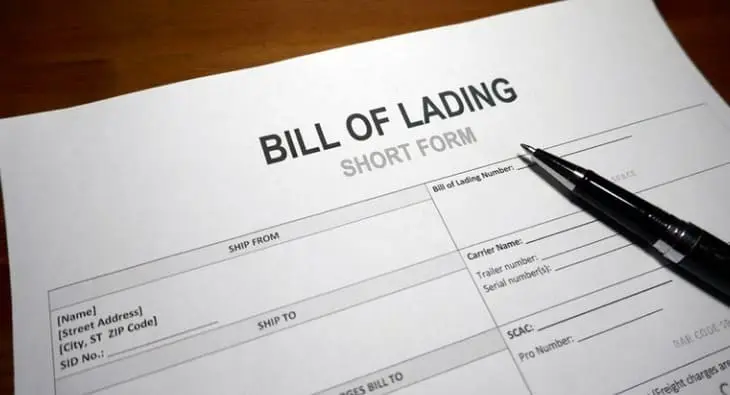
What is a Bill of Lading?
By admin
/ March 19, 2024
In the dynamic realm of international trade, the ‘bill of lading’ holds a pivotal role in ensuring the smooth transportation…
Read More

By Adarsh Gaikwad, Researcher at NITISARA
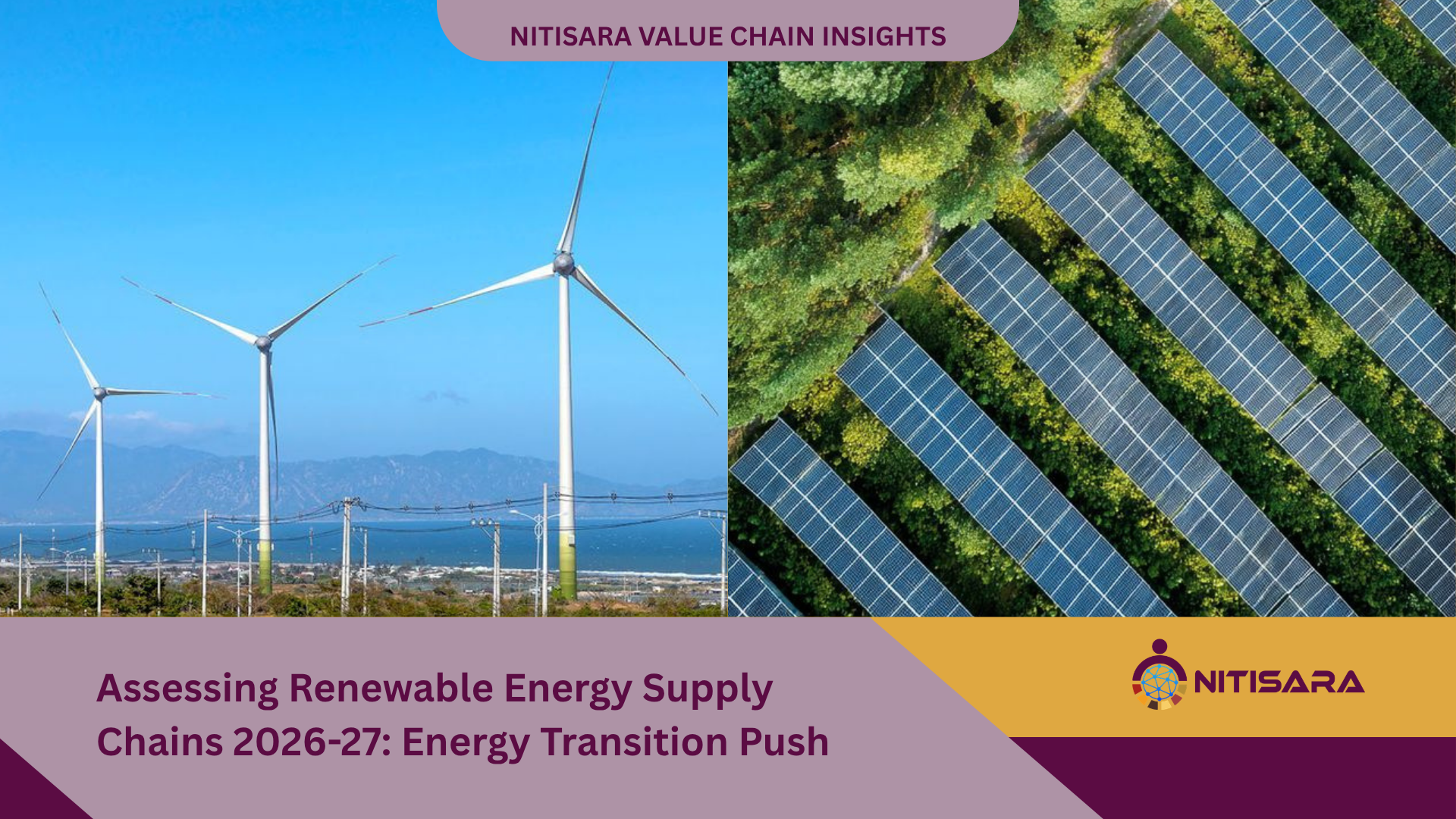
This piece looks at renewable energy manufacturing and the supply chain dynamics that will determine who leads the global energy transition. Clean energy has moved from an environmental conversation to an industrial and geopolitical one, and the countries that dominate solar module and wind component manufacturing will shape the economics of energy for decades. It covers supply chain concentration in clean energy technologies, the role of strategic minerals, and the policy choices through which India is attempting to build a domestic renewable manufacturing ecosystem, and asks whether clean energy can truly be independent when the supply chains that produce it are not.
In 2024, China added 278 GW of solar capacity and 79.8 GW of wind power, more than any other country in history in a single year. It produced 93.2% of the world’s polysilicon, 96.6% of solar wafers, and 86.4% of all PV modules. Chinese firms hold the top four positions among the world’s largest wind turbine manufacturers. Solar module prices have fallen by 94% since 2011, largely because of China’s manufacturing scale. The green energy transition is real and accelerating. But for most of the world, it runs through a supply chain they do not control.
| Component | Global Share | Strategic Vulnerability |
| Solar Wafers | 96.60% | Absolute bottleneck; global lines rely entirely on Chinese wafers. |
| Polysilicon | 93.20% | Centralized chemical refining highly vulnerable to regional shocks. |
| PV Modules | 86.40% | Massive scale that forced a 94% price drop since 2011. |
| Inverters | 55.00% | Critical grid interface under high national security scrutiny. |
There is an appealing idea at the heart of the renewable energy story: that countries that build enough solar panels and wind turbines will finally stop depending on imported fuel. No more oil tankers, no more gas pipelines, no more exposure to the pricing decisions of a cartel. Energy from the sun and the wind, they say, is free. What they do not say is that the equipment to capture it is not.
The solar module, the wind turbine component, and the inverter that converts generated power into usable electricity: each is a manufactured product with its own supply chain, raw material dependencies, and concentration risks. A country that replaces oil imports with solar panel imports has not escaped supply chain dependency. It has traded one form of it for another. And at this moment in history, the new dependency runs very heavily through China.
China’s dominance in renewable energy manufacturing did not happen by accident. Starting in the early 2000s, the government made a deliberate strategic bet: subsidize the manufacturing of clean energy equipment, build domestic demand at scale, drive costs down through volume, and eventually own the global market. Two decades of consistent, patient industrial policy delivered exactly that outcome.
China now accounts for a third of all clean energy investment globally, and more than a quarter of its own economic growth in 2024 came from wind, solar, and battery technologies. Solar PV module prices have collapsed by 94% since 2011. Battery pack prices fell to a record $115 per kilowatt-hour in 2024, a 92% decline from 2010 levels. These price reductions are genuinely good for the world’s energy transition. They have made solar and wind cost-competitive with fossil fuels in most markets. But they have also made it very difficult for manufacturers outside China to compete economically. Norwegian Crystals, a silicon ingot supplier, declared bankruptcy in 2023 due to price pressure. Swiss firm Meyer Burger closed its German factory in 2024 and its U.S. plant in 2025. Non-Chinese solar manufacturers are often 50% to 100% more expensive than Chinese imports, even when they receive government subsidies.
The concentration of renewable manufacturing in China creates three categories of risk that governments are only beginning to take seriously. The first is supply chain disruption. COVID-19 lockdowns severely interrupted solar and semiconductor supply chains. Shipping congestion pushed up wind turbine prices. Wind turbine prices in late 2024 were still 38% above pre-pandemic levels despite subsequent easing. When the manufacturing base for a critical technology is concentrated in a single geographic region, any shock to that region ripples through the entire global installation program.
The second is the inverter problem. Chinese providers, most notably Huawei and Sungrow, account for an estimated 55% of all solar inverter shipments worldwide. An inverter sits at the heart of a solar installation, managing the flow of electricity into the grid. In 2025, U.S. analysts identified unexplained components in Chinese-manufactured inverters that appeared to be designed to enable remote communication with solar installations. EU officials raised similar concerns, with a group of MEPs calling for the exclusion of high-risk vendors from energy grid infrastructure. Huawei alone held a 115 GW share of the EU market at that point.
The third is strategic minerals. The energy transition requires cobalt, lithium, nickel, rare earth elements, copper, and aluminum in quantities that current supply chains cannot easily deliver. These minerals are concentrated in a handful of countries, and China controls significant processing capacity for most of them. A country that builds out its solar and wind capacity without securing access to the minerals and components that go into it has created a dependency, not a solution.
India’s renewable energy ambition is substantial. The country has committed to 500 GW of non-fossil fuel electricity capacity by 2030. As of November 2025, installed renewable capacity had reached 253.96 GW, growing by over 23% year-on-year. Solar capacity crossed 100 GW in January 2025 and reached 132.85 GW by November 2025, with 34.98 GW added in that year. India now stands third globally in solar installed capacity, fourth in wind, and fourth in total renewable energy capacity.
The manufacturing picture, however, tells a different story. Historically, roughly 90% of India’s solar modules came from China. The top three module suppliers in the Indian market were all Chinese. This is precisely the dependency that India’s policy framework is now designed to break. The PLI scheme for high-efficiency solar PV modules has attracted investments of ₹52,900 crore and created 44,400 jobs as of September 2025. Indigenous solar module manufacturing capacity under the Approved List of Models and Manufacturers has reached 144 GW per annum, with 81 GW of that added in 2025 alone, a 99% year-on-year increase. Solar module exports have risen 23-fold from FY2022-23 to FY2024-25, reaching approximately $2 billion, with the U.S. accounting for over 97% of that figure. India is beginning to emerge as an alternative sourcing destination for buyers seeking to diversify out of Chinese supply chains. The Union Budget 2026-27 increased the Ministry of New and Renewable Energy’s allocation by over 40% to ₹44,614 crore, signaling a clear increase in policy commitment.
| Metric / Sector | Current Data | Strategic Reality |
| Module Capacity | 144 GW (+99% in 2025) | Massive downstream success backed by ₹52,900 cr in PLI. |
| Module Exports | $2 Billion (23x vs FY23) | Growing rapidly; 97%+ of shipments are bound for the U.S. |
| Polysilicon Target | Only 14% met | Extreme upstream gap; forces reliance on raw imports. |
| Critical Minerals | ~0% domestic | Near-total reliance on lithium/cobalt; $3.94B mission deployed. |
| MNRE Budget | ₹44,614 cr (+40% hike) | Sharp policy push in Budget 2026-27 to secure self-reliance. |
The honest assessment is that India’s solar manufacturing progress, while real, remains concentrated at the downstream end of the value chain. Module capacity is growing fast. But polysilicon production has reached only 14% of its PLI target as of June 2025. Wafer and ingot capacity remains limited. India still depends on imported cells, wafers, and raw polysilicon to fill its module manufacturing lines, which means the upstream vulnerability has not yet been resolved.
For wind and inverter component manufacturing, the gap is wider. India’s wind turbine sector is more domestically oriented than solar, with companies like Suzlon and Inox Wind maintaining meaningful manufacturing presence. But the global inverter market remains heavily concentrated in Chinese hands, and India has not yet developed a significant domestic inverter manufacturing base capable of competing on cost and scale. The National Critical Mineral Mission, backed by $3.94 billion in funding between 2024 and 2031, aims to secure the mineral inputs that underpin renewable manufacturing. India currently relies almost entirely on imports for lithium, cobalt, and nickel. Without domestic or allied-nation access to these minerals, the manufacturing ecosystem the PLI scheme is trying to build will remain dependent on import supply chains to a degree that policy cannot easily override.
The energy transition is one of the largest industrial transformations in modern history. At its core, it is also a supply chain story. Solar modules, wind components, inverter manufacturing, and the strategic minerals that feed all of them are points of control, leverage, and vulnerability, not neutral inputs, in a world where energy security and national security are increasingly the same conversation.
China has built a decade-long head start. The rest of the world is now spending heavily to catch up, and India is among the most serious contenders for a significant role in the emerging alternative supply chain. The scale of capacity addition is impressive. The policy commitment is real. The question that the next five years will answer is whether India can move upstream, secure its mineral inputs, build out inverter manufacturing, and deliver a renewable energy supply chain that is not just large but genuinely self-reliant. That is a harder task than installing solar panels. It is also more important.
The views expressed do not represent the company’s position on the matter. This is not AI-generated content. Stay informed through the Nitisara Platform and Blogs, and adapt to emerging trends to thrive in the competitive global marketplace. – https://nitisara.org/category/blogs-updates/