What is a Bill of Lading?
By admin
/ March 19, 2024
In the dynamic realm of international trade, the ‘bill of lading’ holds a pivotal role in ensuring the smooth transportation…
Read More

By Sagar Chourasia, Researcher, NITISARA
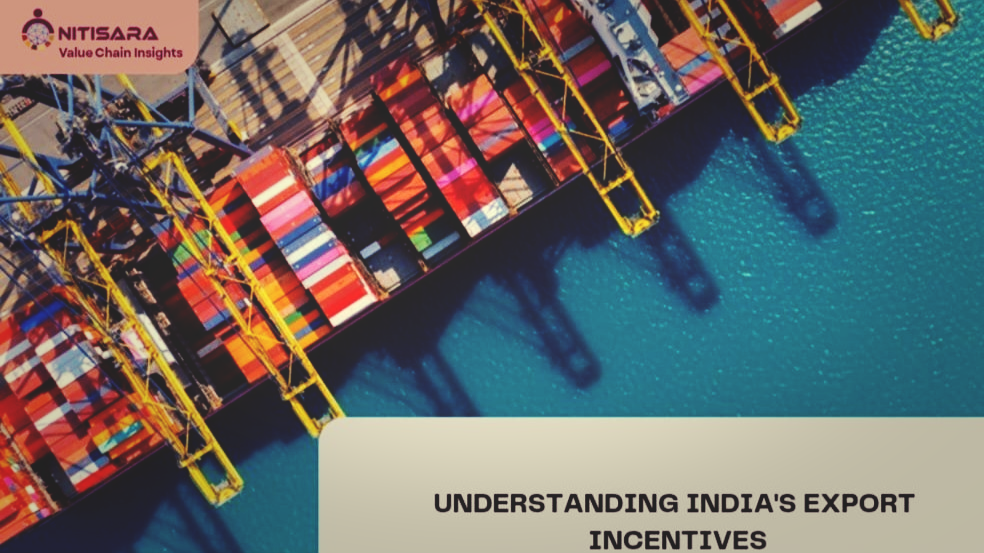
The article includes practical guidance on how to apply for these schemes, key deadlines, expert tips, and a strategic approach to maximize benefits. It’s structured to be both informative and actionable, helping exporters understand not just what’s available, but how to actually access and benefit from these government initiatives. The article provides detailed information about RoDTEP scheme, EPCG scheme, Interest Equalisation, MAI/TIES programs, Export Promotion Mission – with sector-specific strategies and Sector Boosters – targeted support for electronics, pharma, textiles, and engineering.
India’s export ecosystem is evolving rapidly, backed by a robust suite of government incentives that empower businesses to compete globally. From tax refunds to zero-duty imports, these initiatives are designed to enhance export competitiveness, boost manufacturing, and open new markets for Indian enterprises. The RoDTEP scheme offers tax refunds of up to 4.3% of the FOB value, while the EPCG scheme facilitates zero-duty imports of capital goods to modernize production. For MSMEs, the Interest Equalisation Scheme provides up to 3% interest subsidies, easing the cost of export credit. Additionally, programs like MAI (Market Access Initiative) and TIES (Trade Infrastructure for Export Scheme) strengthen market outreach and export infrastructure. Complementing these, the New Export Promotion Mission introduces sector-specific strategies, with sector boosters driving growth in electronics, pharma, textiles, and engineering — collectively shaping India’s roadmap toward a more resilient, export-led economy.
To put India’s export incentive landscape in perspective with real numbers: engineering goods exports in FY 2024-25 soared to a record US$ 116.67 billion, marking a 6.74% year-over-year growth and pushing their share of total merchandise exports up from ~25.01% to ~26.67%. In electronics, the Production Linked Incentive (PLI) scheme has drawn cumulative investments of over Rs 10,200 crore and generated more than 1.37 lakh direct jobs, while mobile production rose from about Rs 19,000 crore in 2014-15 to roughly Rs 4,22,000 crore in 2023-24—a compound annual growth rate of around 41%. These data points highlight how export incentives are translating into concrete boosts in production, employment, and global competitiveness.
The Indian government has rolled out an extensive array of export promotion schemes for 2025, designed to boost international trade and make Indian products more competitive globally. From tax refunds to zero-duty machinery imports, these initiatives offer substantial financial benefits that exporters simply cannot afford to miss.
What it offers: Full refund of embedded taxes and duties that are not covered under GST or other existing schemes. The RoDTEP scheme has emerged as the backbone of India’s export incentive framework, replacing the earlier Merchandise Export from India Scheme (MEIS). Under this program, exporters receive refunds for various central, state, and local taxes that get embedded in the cost of exported products but are not refunded through existing mechanisms.
Key Benefits:
How to Apply: Registration through the DGFT online portal with required documentation including shipping bills, invoices, and export declarations.
What it offers: Zero-duty import of capital goods with an export obligation. The EPCG scheme allows exporters to import capital goods, including machinery, equipment, and spare parts, at zero customs duty. This significantly reduces the initial investment required for setting up or expanding manufacturing facilities.
Key Features:
Eligibility: Manufacturers, merchant exporters tied to supporting manufacturers, and service providers are eligible under specific conditions.
What it offers: Interest rate subsidies on pre and post-shipment export credit. This scheme provides crucial financial support to Micro, Small, and Medium Enterprises (MSMEs) by reducing their cost of capital for export financing. The government provides interest equalization benefits to make export credit more affordable.
Benefits Include:
Coverage: All MSME exporters across manufacturing and specified service sectors are eligible for this benefit.
What it offers: Financial assistance for market development and infrastructure creation. These schemes focus on helping Indian exporters establish a global presence through market development activities and infrastructure support.
MAI Benefits:
TIES Benefits:
What it offers: Comprehensive support for emerging sectors and new markets. The government has launched a dedicated Export Promotion Mission with enhanced focus on high-value sectors including electronics, pharmaceuticals, textiles, and engineering goods.
Key Components:
What it offers: Targeted support for high-potential export sectors. Various sector-specific schemes have been introduced to boost exports in key areas:
Electronics and IT: India’s electronics and IT manufacturing sector continues to gain momentum through a combination of fiscal and policy support. The Production Linked Incentive (PLI) schemes incentivize large-scale manufacturing and exports, while Special Economic Zones (SEZs) provide duty-free benefits and operational flexibility for exporters. Complementing these, technology development funds encourage R&D investments, fostering innovation and value addition across the electronics value chain.
Pharmaceuticals: To help Indian pharma companies strengthen their global presence, the government extends significant assistance for regulatory compliance in international markets, ensuring products meet global standards. Dedicated funding for clinical trials and drug development accelerates innovation, while pharmaceutical parks are being developed with modern infrastructure to promote cost efficiency and integrated value chains.
Textiles and Garments: As one of India’s largest employment-generating sectors, textiles benefit from a renewed focus on modernization and global competitiveness. The Amended Technology Upgradation Fund Scheme (ATUFS) supports the adoption of advanced machinery, while integrated processing development schemes enhance environmental compliance and infrastructure. Furthermore, market development assistance helps textile exporters expand their global reach and diversify market portfolios.
Engineering Goods: India’s engineering exports are being propelled by targeted government interventions that strengthen quality and competitiveness. Initiatives include quality certification support to meet international standards, technology transfer facilitation for innovation and efficiency, and export financing at concessional rates to make Indian engineering goods more price-competitive in global markets. Together, these measures reinforce India’s position as a reliable source of high-value engineering products.
Step 1: Assess Your Eligibility Review all available schemes and identify which ones align with your export profile and business requirements.
Step 2: Prepare Documentation Ensure all required documents are ready, including export licenses, shipping bills, financial statements, and compliance certificates.
Step 3: Register Online Most schemes require online registration through the DGFT portal or respective ministry websites.
Step 4: Plan Your Export Strategy Align your export plans with scheme requirements to maximize benefits while meeting compliance obligations.
Step 5: Monitor and Maintain Compliance Keep track of export obligations, deadlines, and reporting requirements to avoid penalties.
Timing is crucial when it comes to claiming export benefits, as each scheme has specific deadlines that must be strictly adhered to. RoDTEP claims must be filed within 12 months of export, while EPCG scheme participants have six years from the authorization date to fulfill their export obligations. Interest Equalisation claims need to be submitted within specified periods that vary by scheme, and MAI/TIES applications should be checked against specific scheme notifications for accurate deadlines. Missing these deadlines can result in significant financial losses and missed opportunities for substantial savings.
Success in navigating these export incentive schemes requires a strategic approach built on four key pillars. First, maintaining meticulous documentation of all transactions, approvals, and compliance activities is essential, as government audits and claim processes demand comprehensive record-keeping. Second, staying updated with frequently changing government policies and rates through DGFT notifications and trade body updates ensures you don’t miss new opportunities or fall behind on compliance requirements. Third, for complex cases involving multiple schemes or large-scale operations, professional assistance from export consultants or chartered accountants specializing in export incentives can prove invaluable in maximizing benefits while avoiding costly mistakes. Finally, actively networking through export promotion councils and industry associations provides access to real-time information about new opportunities, best practices, and peer experiences that can significantly enhance your export strategy.
The Indian government’s 2025 export incentive package represents one of the most comprehensive support systems for exporters globally. From immediate cash benefits through RoDTEP to long-term infrastructure support through TIES, these schemes can significantly improve the profitability and competitiveness of Indian exports. The key to success lies in understanding the nuances of each scheme, maintaining proper compliance, and strategically planning your export activities to maximize benefits. With proper utilization of these schemes, Indian exporters can not only reduce their costs but also expand into new markets and scale up their operations significantly. Start by identifying which schemes apply to your business, prepare your documentation, and begin the application process. The export landscape in 2025 offers unprecedented opportunities for those who are prepared to seize them.
The views expressed do not represent the company’s position on the matter. Stay informed through Nitisara Platform and Blogs and adapt to emerging trends are poised to thrive in the competitive global marketplace. – https://nitisara.org/category/blogs-updates.