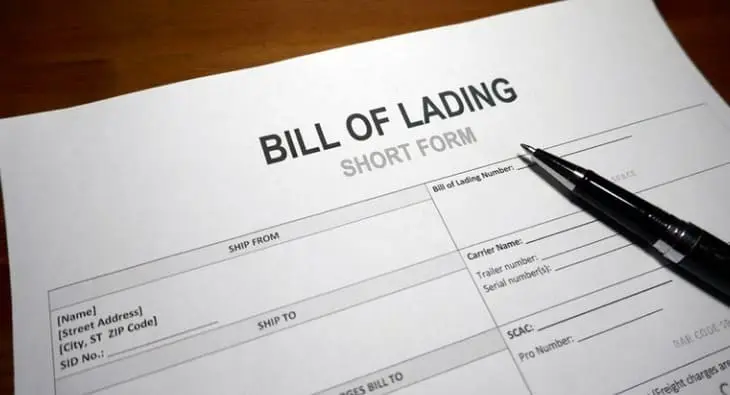
What is a Bill of Lading?
By admin
/ March 19, 2024
In the dynamic realm of international trade, the ‘bill of lading’ holds a pivotal role in ensuring the smooth transportation…
Read More


By Kanak Kansal, Researcher, Nitisara
With global carbon credit markets projected to exceed $9 trillion by 2033, and India targeting $90 billion in revenue from carbon trading by 2030, carbon credits are fast becoming a game-changer for sustainable supply chains.This article explores how India’s 2026 carbon market rollout can transform emissions-heavy sectors, mobilise green finance, and future-proof supply chains in the era of climate accountability.
Carbon credits are tradable permits equivalent to sequestration or avoidance of a single tonne of CO₂ or CO₂e. They are part of increasing international effort towards mitigating climate change by commodifying emission reductions. Companies with emissions lower than the levels they are permitted to have can sell their surplus credits to other companies, offering a market-based solution for managing emissions. Carbon credit systems come in two forms: compliance markets (government-led governance) and voluntary markets (corporate sustainability-led). Monetized carbon savings in the form of credits provide industries with strong incentives to embrace green practices, low-carbon technologies, and renewable energy along supply chains. With international pressure to achieve the Paris Agreement objectives and increased consumer consciousness about climate footprint, strong supply chains are no longer a choice. Carbon credits are both a compliance tool and an economic incentive for emissions reduction, particularly in high-emitting sectors. India too is falling in line with the trend, instituting its Carbon Credit Trading Scheme (CCTS) and planning to get its compliance market up and running by 2026, presenting significant opportunities and challenges to stakeholders across all economic segments.
The international carbon credit market is growing fast. More than $948 billion worth of carbon allowances were exchanged in the global market in 2023 alone, an increase of 2% from the year before. The compliance carbon market leads, with about 12.5 gigatonnes (GtCO₂e) of emissions traded, while voluntary carbon markets (VCM) traded approximately 300 million tonnes (MtCO₂e). The voluntary market, though small, is experiencing high demand from corporates looking to boost their ESG reputations and fulfill net-zero commitments.
The European Union Emissions Trading System (EU ETS) is the largest and most advanced compliance market globally, accounting for about 87% of the overall value of the global carbon market. China’s national ETS, currently covering the power sector, is the largest in terms of volume. Other nations, such as the United States, South Korea, and New Zealand, are also growing their market mechanisms. Carbon pricing encompasses roughly 23% of total emissions and is estimated that carbon markets would be valued at $4–9 trillion by 2033, with a compound annual growth rate (CAGR) of 24–38%.
Established markets provide a variety of trading and pricing platforms. The EU cap-and-trade system brings together auctioning and free allowances for emission-intensive, trade-exposed industries. The U.S. has regional systems such as the Regional Greenhouse Gas Initiative (RGGI) and California’s Cap-and-Trade Program. China’s ETS, which is presently extended to power generation, will extend to cement and steel. These markets provide important policy and structural templates for India to construct its own carbon trading system.
India’s carbon market journey picked up pace post-COP26, when it pledged to achieve net-zero emissions by 2070. The Energy Conservation (Amendment) Bill, 2022, was a major legislative benchmark, which by law delineated the guidelines for carbon credit trade. In June 2023, the Ministry of Power notified the Carbon Credit Trading Scheme (CCTS), officially kicking off the compliance avenue. The CCTS is intended to combine both mandatory and voluntary mechanisms. It gives power to specified agencies to award Carbon Credit Certificates (CCCs) to organisations that abate emissions above the required level. The certificates are tradable on regulated markets, incentivising state and non-state actors to engage in carbon reduction programmes. The market will be in addition to India’s current Perform, Achieve and Trade (PAT) and Renewable Energy Certificate (REC) programme, consistent with the nation’s overall decarbonisation agenda.
Overseeing India’s carbon market is the National Steering Committee for Indian Carbon Market (NSCICM), composed of members from the Bureau of Energy Efficiency (BEE), Ministry of Environment, and Ministry of Power. The committee is tasked with prescribing operational procedures, establishing benchmarks, and maintaining transparency. Carbon Credit Certificates (CCCs) are likely to be issued and followed digitally using secure registries. The Indian market will implement a Measurement, Reporting, and Verification (MRV) system to avoid double-counting and ensure accountability. Market-based price determination will be done through specialized digital trading platforms, enabling real-time trades and involvement from financial organizations.
India hopes to use its carbon market to mobilize investment in green infrastructure and technologies. India’s carbon market could earn up to $90 billion by 2030, according to estimates. Renewable energy, energy efficiency, afforestation, and low-carbon agriculture are areas where its growth will be prominent. This monetisation value will not merely aid India’s low-carbon economy transition but also make it competitive globally in terms of trade, particularly with the advent of carbon border adjustment mechanisms (CBAMs) in the EU and elsewhere.
The advent of a carbon market in India will have game-changing impacts on supply chains, particularly in high-emission industries such as cement, steel, and chemicals. These industries will come under more regulatory heat to either implement cleaner production processes or buy carbon credits to stay compliant. With the EU’s CBAM in play, exporters will have to prove carbon-neutral processes to steer clear of penal tariffs. The renewable energy space is expected to gain majorly. Carbon credits can be additional sources of revenue for solar and wind projects, stimulating indigenous production of component parts like polysilicon and PV cells, currently the preserve of imports. Decentralised renewable solutions and electric mobility services will also catch on as supply chain players look to reduce Scope 3 emissions.
Financial institutions will be at the centre of the success of India’s carbon credit market. Banks and NBFCs will finance projects that produce carbon credits, while capital markets will facilitate securitisation and trading of the credit. Green bonds, carbon-linked loans, and ESG funds will become increasingly mainstream. Further, commodity exchanges and fintech platforms could help facilitate price discovery and liquidity in the carbon market. Insurance companies can provide risk mitigation services in case of credit underperformance or project failure. Financial institutions will also have to modify their risk evaluation models to incorporate carbon liability and emission exposure while valuing supply chain projects.
Carbon credits may infuse sustainability into procurement processes by providing concrete incentives for reducing emissions. Suppliers that embody carbon efficiency may be awarded CCCs, with associated competitiveness and financial appeal. Institutions can create procurement policies that give preference to low-carbon suppliers or ask for carbon footprint disclosure during bidding. Measurement, Reporting, and Verification (MRV) systems will be essential instruments in guaranteeing transparency and traceability in supply chains. Blockchain and IoT technologies can also be combined to monitor emissions at every supply chain node. Traceability will improve corporate ESG scores and instill consumer confidence.
India’s upcoming carbon market is a major change in the monetization and governance of environmental responsibility. In addition to fulfilling regulatory obligations, carbon credits provide a strategic means to synchronize financial incentives and climate objectives. As India is set to initiate its carbon compliance market by 2026, companies need to adopt sustainability throughout their supply chains—ranging from sourcing and production to logistics and distribution. Financial institutions, regulators, and corporations have a shared responsibility to build a transparent, liquid, and efficient carbon trading ecosystem. This transformation will not only reduce emissions but also unlock green investment, improve global trade competitiveness, and contribute meaningfully to global climate targets.
The above article does not represent the views and positioning of the company. Stay informed through Nitisara Platform and Blogs and adapt to emerging trends are poised to thrive in the competitive global marketplace.- https://nitisara.org/category/blogs-updates/