What is a Bill of Lading?
By admin
/ March 19, 2024
In the dynamic realm of international trade, the ‘bill of lading’ holds a pivotal role in ensuring the smooth transportation…
Read More


By Palak Bhagasra, Researcher, NITISARA
This blog delves into practical and effective strategies for collecting, sorting, cleaning, and recycling waste produced on ships. We’ll explore how ship crews can implement better waste segregation at sea, how ports are becoming waste management hubs, and what innovative technologies—from compact recycling units onboard to AI-powered sorting systems—are leading the charge. By aligning efforts between shipping companies, crew members, port authorities, and recycling firms, we can turn ship waste from an environmental liability into a valuable resource—and take a big step toward a cleaner, more sustainable future for maritime trade.
The maritime industry is the backbone of global commerce, with ships transporting over 80% of goods worldwide. From massive container vessels to cruise ships and oil tankers, these floating giants keep economies moving. Yet, behind this vital function lies a growing environmental concern: ship-generated waste. Items like used cotton gloves, worn-out rugs, mooring ropes, food packaging, plastic containers, and maintenance debris accumulate during long voyages. If not managed responsibly, this waste ends up polluting the oceans, harming marine life, and contributing to the broader crisis of ocean plastic and waste contamination. Traditionally, much of this onboard waste was incinerated, dumped, or sent to landfills once the ship reached port. However, with increasing pressure from international regulations like MARPOL Annex V, sustainability commitments from shipping companies, and growing public awareness, the industry is now exploring better ways to handle maritime waste.
India has emerged as a major global hub for ship recycling, dismantling approximately 2.26 million GT in 2022 and 2.47 million GT in 2023 — about 33% of the world’s ship-gross tonnage dismantled during that period. With projections estimating growth to 3.8–4.2 million GT by 2025, at a compound annual growth rate (CAGR) of about 10% through 2028, the scale of ship-waste arriving for recycling is set to increase sharply. Recognising environmental, health and safety challenges, the Government enacted the Recycling of Ships Act, 2019, which mandates authorization, inspections, ship recycling plans, and “Ready for Recycling Certificates” to ensure safe, environmentally sound practices. Further, in the Union Budget 2025-26, policy measures including Credit Notes amounting to 40% of the scrap value have been proposed for ships dismantled in Indian yards, along with customs duty exemptions for raw materials and components used in ship-breaking, aimed at boosting circularity, formalising collection and cleaning processes, and increasing competitiveness of the sector.
Every day, ships produce a variety of waste materials: plastic containers, damaged equipment, leftover food, used textiles like cotton gloves and rugs, and worn-out ropes. According to the International Maritime Organization (IMO), plastic waste alone makes up over 80% of marine litter found at sea (IMO, 2022). Without proper waste management, these materials can end up in the ocean—causing harm to sea creatures, coral reefs, and even entering the human food chain through seafood. That’s why managing and recycling ship waste has become a top priority in the shipping industry.
Current Waste Management Practices on Ships: Ships are required to follow MARPOL Annex V, an international regulation that controls how waste is handled at sea. It requires:
Some ships also use compactors, shredders, and incinerators to reduce the volume of waste onboard. While these steps help, they are often limited to disposal and don’t focus enough on recycling. To go beyond disposal, ships and ports must adopt systems that separate waste types more effectively and allow recycling wherever possible.
Ship waste recycling faces three interconnected challenges that significantly impede effective maritime waste management practices. The fundamental constraint of limited onboard space creates substantial difficulties for proper waste segregation and storage of recyclables during extended voyages, as vessels must prioritize operational space over comprehensive recycling infrastructure. This spatial limitation is compounded by the inconsistent availability of port recycling facilities, where many ports lack the necessary infrastructure to process segregated waste materials, thereby discouraging ships from maintaining onboard recycling practices when the critical final step of the recycling process remains unavailable at destination ports. The third major challenge involves contamination issues, particularly with materials such as oily rags, chemically contaminated gloves, and mixed waste streams that are inherently difficult to recycle effectively. The cleaning processes required to prepare these contaminated materials for recycling demand additional water, energy, and specialized systems that many ships cannot accommodate due to resource constraints and technical limitations. These challenges collectively create a complex web of operational, infrastructural, and technical barriers that must be addressed through coordinated efforts between shipping companies, port authorities, and waste management facilities to develop comprehensive solutions that acknowledge the unique constraints of maritime environments while promoting sustainable waste management practices throughout the shipping industry.
Precautionary Measures and Best Practices
1. Dedicated Waste Collection Ships: Used in the Netherlands and parts of Asia, these vessels retrieve floating ship garbage and process some of it onboard, using conveyor belts and compactors.
2. Smart Recycling Systems Onboard: Pilot systems use optical scanners and smart bins to separate cotton gloves, mooring ropes, plastic packaging, and textiles.
3. Underwater Cleaning Robots: Used in Singapore, these devices clean around piers and hulls, retrieving materials like ropes or mats that fall during cargo loading.
4. Port-Based Recycling Programs: Australia’s Maritime Recycling Risk Assessment Trial (MRRAT) focuses on sorting and recycling waste safely at port facilities, minimizing marine litter (Australian Maritime Safety Authority, 2023).
The maritime industry is experiencing a technological revolution in ship waste management through innovative solutions that address traditional challenges while enhancing operational efficiency and environmental sustainability. Innovative waste-to-energy technologies are being explored to convert maritime waste into useful resources, such as electricity or heat. These systems not only reduce waste but also provide onboard energy. Waste Management in the Maritime Sector – Cleaner Seas Advanced onboard waste processing systems, including microwave-assisted pyrolysis and compact incineration units, are enabling ships to convert waste into energy or significantly reduce waste volumes during voyages. Increased digitization allows for earlier notification of incoming waste, better monitoring of waste flows, and easier sharing and analysis of data Managing Port and Shipping Waste Challenges and Best Practices | PEMSEA, facilitating better coordination between ships and port facilities. Smart waste management technologies are incorporating AI-powered sorting systems, IoT sensors for real-time monitoring of waste levels, and blockchain solutions for transparent waste tracking throughout the supply chain. Zero discharge systems are designed to eliminate waste discharges at sea Waste Management in the Maritime Sector – Cleaner Seas, representing a paradigm shift toward completely closed-loop waste management aboard vessels. Modular waste processing units designed specifically for maritime environments are being developed to maximize space efficiency while providing comprehensive recycling capabilities, including advanced filtration systems for contaminated materials and automated sorting mechanisms. Additionally, the implementation of predictive analytics and machine learning algorithms is optimizing waste collection routes and improving the efficiency of port-based recycling infrastructure, while emerging partnerships between shipping companies and waste management technology providers are creating integrated solutions that span from onboard generation to final disposal, fundamentally transforming how the maritime industry approaches waste management challenges.
| Technology | Function |
|---|---|
| Waste Collection Ships | Collect floating and ship-offloaded waste. Equipped with compactors/shredders. |
| Smart Sorting Systems | Automatically separate waste onboard (e.g., plastics, textiles, ropes). |
| Autonomous Cleaning Robots | Drones clean underwater dock areas and ship hulls, collecting micro-waste. |
| Port-Based Recycling Programs | Projects like Australia’s MRRAT explore safe textile and plastic recycling. |
Example: Types of Waste Generated Onboard (Average Cruise Ship)
| Waste Type | Volume per Week (kg) |
|---|---|
| Plastics & Packaging | 2,000 |
| Textiles (rugs, gloves) | 500 |
| Food Waste | 4,000 |
| Paper & Cardboard | 1,500 |
| Metal & Electronics | 300 |
Source: Wärtsilä Cruise Ship Waste Analysis, 2024https://nitisara.org/category/blogs-updates
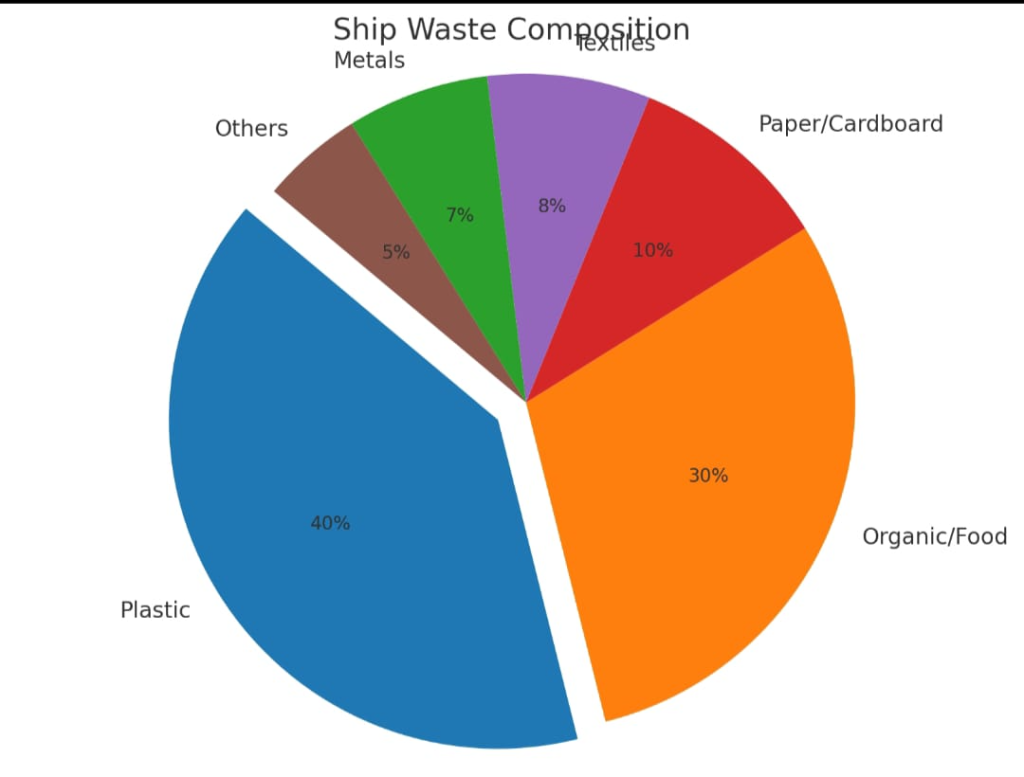
Graph: Ship Waste Composition
Source: Compiled from industry reports and marine waste management studies, including data inspired by IMO
Waste Type Approx. % of Total Waste
Plastic 40%
Organic/Food 30%
Paper/Cardboard 10%
Textiles 8%
Metals 7%
Others 5%
This breakdown helps illustrate why plastics and textiles should be a top focus for recycling systems onboard ships and in ports.
Ship waste is a serious issue—but it’s also an opportunity. With better systems for collecting, cleaning, and recycling materials like used cotton gloves, mooring ropes, and rugs, the maritime industry can take real steps toward sustainability. By using new technologies and following simple waste management practices, we can protect marine life, reduce pollution, and sail toward a cleaner future.
The views expressed do not represent the company’s position on the matter. Stay informed through the Nitisara Platform and adapt to emerging trends to thrive in the competitive global marketplace. – https://nitisara.org/category/blogs-updates