What is a Bill of Lading?
By admin
/ March 19, 2024
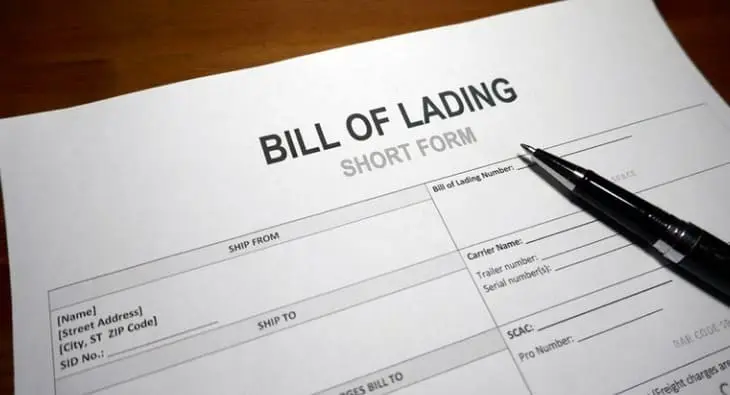
In the dynamic realm of international trade, the ‘bill of lading’ holds a pivotal role in ensuring the smooth transportation…
Read More


By Palak Bhagasra, Researcher, NITISARA
Products often pass through many countries before reaching us. In 2023, goods worth over $30 trillion were traded worldwide. So it’s not easy to say where a product is really “from.” This is where the idea of Country of Origin(COO) becomes important. This write-up explains what COO means, how it is decided, and why it matters for things like import taxes, trade deals and customer choices. It also talks about the two main types of rule-preferential and non-preferential-and the common ways used to figure out a product’s origin. With examples from countries like the U.S., EU, and India, it shows how different governments handle COO. Have you ever noticed that “Made in “tag on your clothes, electronics, or food products? Product often pass through several countries before they reach us, defining the country of origin isn’t always as straightforward as it seems. In this article, let’s break down what country of origin means, how it’s defined for international trade, and why it’s so important-for governments, businesses, and even us as consumers.
In 2024, global merchandise exports reached approximately US$ 24.4 trillion, marking a growth of 2.3% and nearing the peak levels seen in 2022. Much of this trade is highly concentrated: China alone accounted for about 14.3% of the world’s total goods exports in 2024, making it the single largest origin country by far. Germany, the U.S., Netherlands and a handful of others make up the next tier, but their shares are significantly lower. Interestingly, the pattern of “country of origin” matters critically — products labeled as “Made in X” not only influence trade flows but also reflect supply chain structure, regulatory regimes, and comparative advantage: for example, over 66% of European exports remain within Europe, while in Asia, about 59% of exports are intra-regional; in contrast, regions like Oceania, Latin America, and Africa export mainly to extra-regional partners. These numbers underscore how origin matters—not just for trade volume, but for the geopolitical, economic, and regulatory dynamics that shape how goods move globally.
Building on the importance of identifying the Country of Origin (COO) in global trade, international regulations have evolved to ensure transparency, traceability, and fair market access. The World Trade Organization (WTO) sets the overarching framework through its Agreement on Rules of Origin, which distinguishes between preferential and non-preferential origins to standardize how countries classify goods. Complementing this, the World Customs Organization (WCO) provides the Harmonized System (HS) nomenclature and guidance on origin determination under its Revised Kyoto Convention, encouraging consistency among customs administrations.
At the regional level, frameworks such as the European Union’s Union Customs Code (UCC), the United States’ Trade Agreements Act (TAA), and ASEAN’s Rules of Origin Protocols define product-specific criteria and certification procedures. Similarly, CAROTAR 2020 in India and China’s Measures for the Administration of the Rules of Origin ensure compliance within their respective FTA commitments. Many trade agreements—like RCEP, USMCA, and EU-Japan EPA—mandate electronic certification and mutual recognition systems to minimize fraud and simplify cross-border verification. These evolving global standards not only help customs authorities prevent tariff circumvention and origin misrepresentation but also strengthen supply chain integrity in an era where goods often cross multiple borders before completion. As compliance expectations tighten, accurate origin documentation and digital traceability have become critical for exporters and importers navigating the complex web of international trade regulations.
Country of Origin refers to the country where product is considered to be made. This could be the place where it was grown, mined, manufactured, or significantly changed into its final form. The tricky part is figuring out which country gets the credit when a product is the result of many steps across different borders. For example:
You might be thinking: Does it really matter where something is made? Yes, it does. The COO affects many important things like:
Government and international organizations use rules of origin to decide where a product is “from.” There are two main types:
So how do authorities figure out the COO of a product? Here are some standard methods:
1. Wholly Obtained: This is the easiest case. A product is considered to be from a country if everything-materials, labor, and production-happened there. An Example is the Tea grown in Assam where India is COO.
2. Substantial Transformation: If different parts come from different places, the COO is usually the country where the product went through a major change. An Example: If car parts come from Japan, German, and India, but the final car is assembled in India, it may be labeled “Made in India.”
3. Change in Tariff Code: Every product has a code in the international trade system. If the code changes during manufacturing, that may mean the product changed enough to count as “made” in a new country.
4. Value Addition: Sometimes, the decision depends on where most of the product’s value comes from. For example, if 40% or more of product’s value is added in a certain country, that country can be considered the COO.
The determination of a product’s Country of Origin (COO) is a cornerstone of international trade, impacting tariffs, labeling, preferential treatment under trade agreements, and even consumer perception. However, each nation interprets and enforces COO rules differently, based on its trade policy framework, customs regulations, and global agreements.
With supply chains spread across the globe, defining COO is more complicated than ever. Also, some companies fake the origin of goods to avoid taxes or got trade deal benefits. That’s illegal-and customs departments are getting stricter about checking origin documents. Now, governments are using technology like QR code, block chain, and AI to trace supply chains and make origin tracking more reliable. Country of Origin isn’t just a line on a label. It affects everything from taxes and trade to trust and transparency. As global trade continues to grow and change, understanding how COO works becomes more important- for businesses, governments, and even everyday buyers like us.
The views expressed do not represent the company’s position on the matter. Stay informed through Nitisara Platform and Blogs and adapt to emerging trends are poised to thrive in the competitive global marketplace. – https://nitisara.org/category/blogs-updates.