What is a Bill of Lading?
By admin
/ March 19, 2024
In the dynamic realm of international trade, the ‘bill of lading’ holds a pivotal role in ensuring the smooth transportation…
Read More

By Kanak Kansal, Researcher, Nitisara
We examines how diversifying export markets, enhancing value-added manufacturing, and integrating sustainability-driven trade policies can strengthen economic resilience. With global merchandise trade expected to grow at only 2.6% annually (WTO, 2024–2030) and supply chain disruptions costing firms nearly $1.6 trillion in 2023 (McKinsey), export-led strategies have become essential for maintaining competitiveness. But with increasing global uncertainties spanning from geopolitical tensions to over-reliance on narrow markets, de-risking supply chains has become imperative.
India’s vision to reach a $5 trillion economy is heavily reliant on securing its export chain, which contributes almost 20% of the GDP at present. India’s aspiration to become a global export powerhouse remains constrained by structural inefficiencies, subdued competitiveness, and fragile supply chains.The frequent supply shocks, ranging from geopolitical tensions to raw material bottlenecks, further expose India’s export ecosystem to volatility. Despite being the economic backbone of India, SMEs still struggle with ongoing issues in terms of getting enough funding. Several of these companies cannot obtain timely and affordable credit, frequently stuck in convoluted procedures or without collateral required by conventional lenders. However, our government is actively working towards bridging this financial gap. The establishment of E-commerce hubs, covered under the Union Budget 2024-2025, can be viewed as an advancement in the quest for boosting trade online. The budget also includes measures such as reducing the TDS rate on e-commerce transactions from 1% to 0.1%, enhancing liquidity for sellers. This article dwells on the challenges faced by SMEs due to poor funding, the various measures to be taken and the initiatives that have already been implemented by the government to support them.
India’s export promotion policy is a strategic framework aimed at enhancing the global competitiveness of Indian goods and services. With global trade dynamics shifting rapidly, India has moved from merely offering incentives to building robust ecosystems through policy reforms, digital trade facilitation, and production-linked incentives.
| Scheme | Objective |
| Production-Linked Incentive (PLI) | Encourages manufacturing in 14 sectors via financial incentives based on sales. |
| Remission of Duties and Taxes on Exported Products (RoDTEP) | Refunds taxes/duties not covered under other schemes to exporters. |
| Export Promotion Capital Goods (EPCG) | Zero-duty import of capital goods with export obligations. |
| Interest Equalisation Scheme (IES) | Interest subsidy of 3–5% on export credit for MSMEs. |
| Credit Guarantee Fund Trust for MSEs (CGTMSE) | Collateral-free loans up to ₹2 crore for MSMEs. |
| Market Access Initiative (MAI) | Funds for export promotion events and international market access. |
| PM’s Employment Generation Programme (PMEGP) | Subsidy-based funding to promote rural micro-enterprises. |
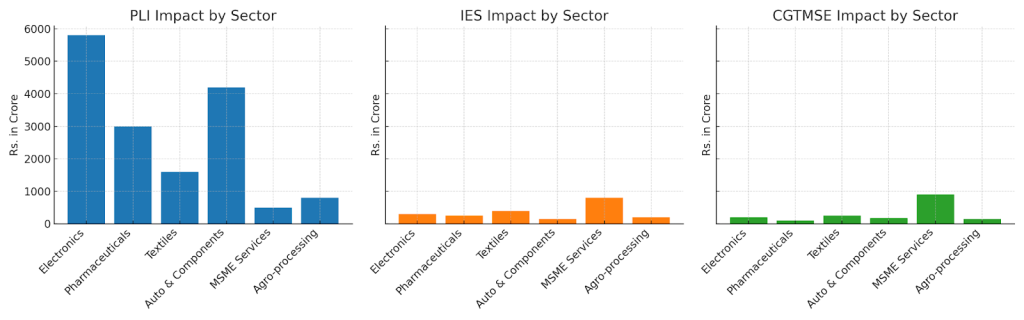
Figure 2: Impact evaluation of schemes under export promotion policy in different sectors
Source: Author’s own
India is home to over 63 million MSMEs, of which only a small fraction, about 1.5 million (around 2-3%), are currently engaged in exports. This underlines a massive untapped potential. The below table indicates that the MSMEs are facing critical financing access in terms of credit lines, loans and investments.
| Indicator | Data Point |
| Unmet Credit Gap | ₹33 lakh crore (~US $400 billion) |
| Formal Credit Coverage | Only 16% of SMEs |
| Funding Through Informal Sources | Over 80% |
| SMEs Facing Finance Access Issues | 42% |
| SMEs Actively Seeking External Funding (2024) | 71% |
| SME Shutdowns Since 2019 | Over 35,000 |
Despite recovery from the COVID-19 pandemic, India’s overall export numbers have remained relatively stagnant, with only marginal increases in key sectors like textiles and pharmaceuticals. For instance, textile exports grew from USD 36.7 billion in FY22 to only around USD 37.5 billion in FY24, while pharmaceutical exports saw a modest rise from USD 24.6 billion in FY22 to USD 25.4 billion in FY24. These figures highlight that while global demand has rebounded, India’s export growth hasn’t kept pace, especially when compared to other emerging economies. A direct correlation emerges between limited export growth and lack of accessible financing, especially for MSMEs. Inadequate funding restricts their ability to scale production, invest in compliance and certification, or access global markets, making export financing a critical bottleneck that must be urgently addressed to unlock India’s full trade potential.

Figure 1: Graph showing MSME credit penetration in India, China, and the United States.
Source: Author’s own
Over the last few years, India has moved from incentive-based approaches to long-term structural changes to make its export environment more efficient, resilient, and competitive. Institutional coordination, contemporary logistics infrastructure, and district-level export strategies are being implemented to facilitate exporters, especially MSMEs.Flagship projects such as PM Gati Shakti, Dedicated Freight Corridors, and the Districts as Export Hubs scheme reflect a larger movement toward integrated planning, logistics cost reduction, and improving global trade facilitation. These together are aimed at de-risking supply chains, governance rationalization, and making Indian businesses more competitive in global markets.
| Reform Initiative | Objective/Benefit |
| PM Gati Shakti & National Logistics Policy | Unified planning platform for logistics & infrastructure across ministries |
| Multi-Modal Logistics Parks (MMLPs) | Lower freight costs, faster cargo turnaround, bonded warehousing |
| Sagarmala & Freight Corridors | Improved port and rail-road connectivity to reduce logistics time |
| Districts as Export Hubs (DEH) | Localized export action plans, linking small businesses to international markets |
| ODOP (One District One Product) | District-wise specialization and branding for export visibility |
| State-level Industrial Infra | State-led PPP industrial parks, dry ports, warehousing expansion |

Figure 2 : Relative impact evaluation of key structural and institutional`reforms
Source: Author’s own
India is fast becoming a digitally-powered trade powerhouse with the help of state governments leveraging advanced technologies to ease export processes, make compliance easier, and remove logistics bottlenecks. The government’s digitalization of customs, single window systems, e-certification, and e-commerce infrastructure is inducing a frictionless experience, enabling MSMEs to access global value chains faster, more efficiently and transparently.
| Reform Initiative | Description & Export Benefit |
| ICEGATE + ICES / SWIFT / eSANCHIT | Digitized customs clearance system integrated with ports and stakeholders; supports paperless trade, e-filing, and faceless clearance. |
| Turant Customs & Faceless Assessment | Eliminates physical interface; reduces clearance time, improves transparency through risk-based document processing. |
| eCoO 2.0 (Electronic Certificate of Origin) | Online generation of origin certificates with Aadhaar e-signature; over 7,000 issued daily, facilitating preferential trade under FTAs. |
| eBRC (Electronic Bank Realization Certificate) | Automated bank data linkage with DGFT; allows seamless credit tracking and reduces documentation burden on exporters. |
| NSWS (National Single Window System) | Provides a unified portal for over 270 approvals and registrations, reducing procedural complexity for new exporters. |
| BharatTradeNet & Trade Connect | National-level trade promotion infrastructure integrating customs, banks, and export councils for real-time tracking and issue resolution. |
| E-Commerce Export Hubs (ECEH) | Digitally integrated logistics + warehousing centers for small exporters; support global direct-to-consumer fulfillment and compliance. |
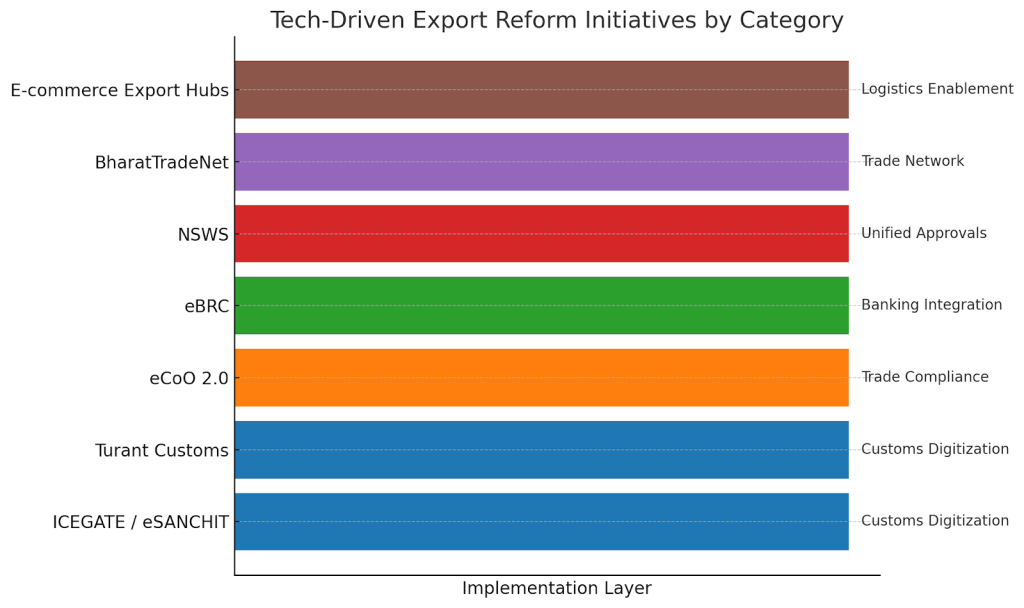
Figure 3: A flowchart delineating technical schemes grouped by their functioning categories. Source: Author’s own
The above article does not represent the views and positioning of the company. Stay informed through Nitisara Platform and Blogs and adapt to emerging trends are poised to thrive in the competitive global marketplace.- https://nitisara.org/category/blogs-updates/