What is a Bill of Lading?
By admin
/ March 19, 2024
In the dynamic realm of international trade, the ‘bill of lading’ holds a pivotal role in ensuring the smooth transportation…
Read More


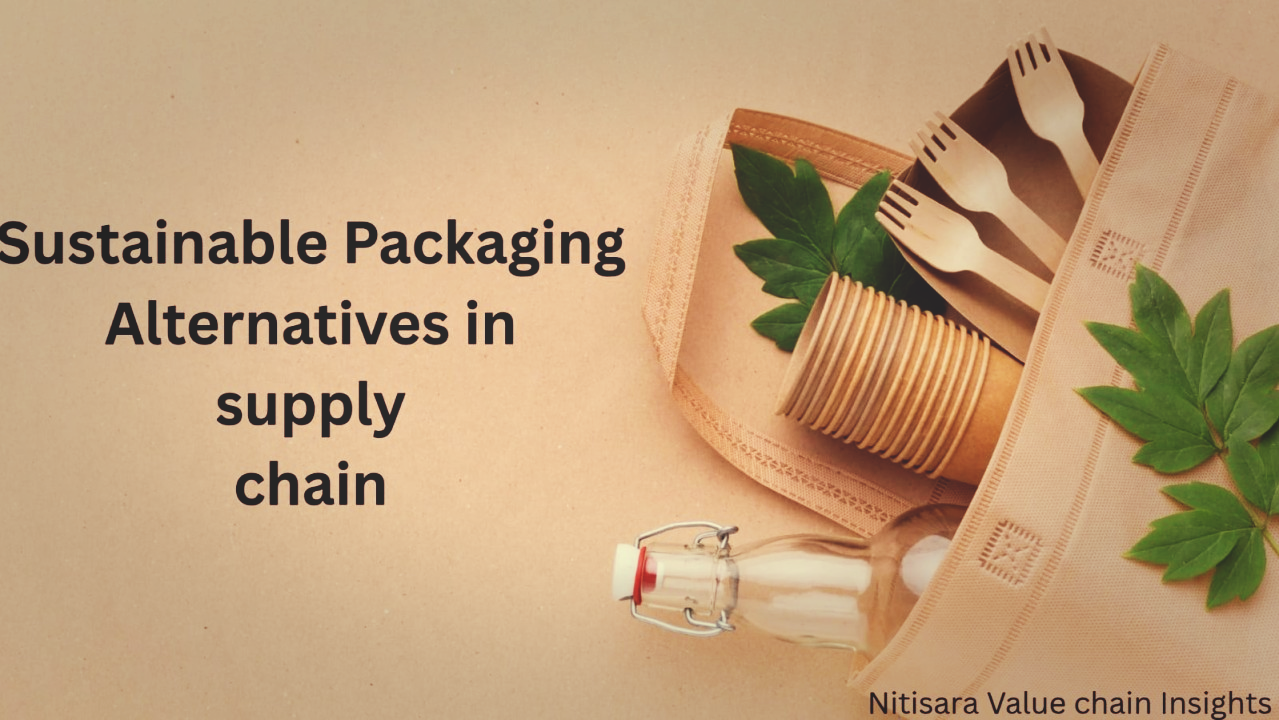
By Palak Bhagasra, Researcher, NITISARA
Global smart packaging market demonstrates robust growth across various analytical frameworks. The global smart packaging market size is calculated at USD 30.33 billion in 2024 and is projected to hit around USD 55.56 billion by 2034 with a CAGR of 6.24%. However, different research methodologies reveal varying projections, with some studies indicating even more aggressive growth trajectories. As companies around the world aim to reduce their environmental impact and embrace the principles of the circular economy, there’s a growing interest in eco-friendly, seaworthy, and cost-effective alternatives to traditional wooden pallets. This blog explores the problem with wood, the rise of sustainable pallet solutions, key innovations in packaging design, and how businesses can adopt them without sacrificing performance or profitability.
The logistics industry stands at the precipice of a technological revolution, with smart packaging emerging as a transformative force that promises to reshape how goods are transported, monitored, and delivered across global supply chains. As consumer expectations for transparency, sustainability, and product quality continue to rise, the integration of intelligent technologies into packaging systems has evolved from an innovative concept to a business imperative. Smart packaging represents a convergence of traditional packaging science with cutting-edge technologies including Internet of Things (IoT) sensors, nanotechnology, biodegradable materials, and advanced monitoring systems. This evolution addresses critical challenges in modern logistics: reducing waste, ensuring product integrity, enhancing supply chain visibility, and meeting increasingly stringent environmental regulations.
The intelligent packaging segment, which represents the most sophisticated applications of smart packaging technology, shows particularly strong growth momentum. Smart Packaging Market was valued at USD 21.3 billion in 2023 and is expected to grow at a CAGR of over 8% between 2024 and 2032. This growth trajectory underscores the increasing adoption of advanced packaging solutions across industries. The market was valued at USD 28,400 million in 2025 and is projected to reach USD 67,200 million by 2035, reflecting a compound annual growth rate (CAGR) of 9.0% over the forecast period. This variance in projections reflects the dynamic nature of the sector and the rapid pace of technological advancement driving market expansion.
Wooden pallets are everywhere—in warehouses, shipping containers, and store backrooms. Globally, it’s estimated that over 4 billion wooden pallets are in circulation at any given time. While they’re inexpensive and effective, the costs to the environment and supply chain efficiency are often overlooked. Additionally, international regulations like ISPM-15 require heat treatment of wooden pallets to prevent the spread of pests, adding to processing costs and carbon emissions. Some Environmental Drawbacks:
The food and beverage sector emerges as the primary driver of smart packaging adoption. By end use, food and beverages occupy 24% of the market share in 2025. This dominance reflects the critical importance of maintaining product safety, freshness, and quality throughout the supply chain, where smart packaging technologies provide real-time monitoring capabilities that traditional packaging cannot match. The pharmaceutical industry represents another significant growth driver, where smart packaging solutions address stringent regulatory requirements, anti-counterfeiting needs, and temperature-sensitive product protection. The convergence of these sectors with logistics operations creates a compelling value proposition for smart packaging implementation. To replace wood pallets effectively, the alternative must satisfy three main criteria:
Recycled plastic pallets represent one of the most promising alternatives to traditional wood pallets, constructed from post-consumer plastic waste or industrial plastic byproducts. These pallets offer exceptional durability, lasting up to ten times longer than their wooden counterparts while providing superior resistance to water, rot, mold, and pest infestations. Their uniform weight and standardized dimensions make them particularly well-suited for automated warehouse systems and efficient stacking operations, contributing to streamlined logistics processes. The manufacturing process transforms plastic waste into high-performance logistics solutions, creating a circular economy model where end-of-life pallets can be fully recycled into new products. This sustainability advantage is complemented by their hygienic properties, as plastic surfaces can be easily cleaned and sanitized without absorbing contaminants. However, organizations must consider the higher upfront investment costs, though these are typically offset by the extended lifespan and reduced replacement frequency. Additionally, plastic pallets may become slippery in wet conditions, requiring careful handling protocols. These characteristics make recycled plastic pallets particularly valuable in pharmaceutical, food processing, and international shipping applications where hygiene standards are paramount and moisture resistance is critical. The combination of longevity, cleanliness, and weather resistance positions recycled plastic pallets as an ideal solution for industries requiring stringent quality control and regulatory compliance.
Corrugated paper and cardboard pallets utilize engineered cardboard constructed from recycled paper fibers, often incorporating honeycomb or corrugated structural reinforcements to enhance strength while maintaining minimal weight. These ultra-lightweight alternatives significantly reduce fuel consumption during transportation, contributing to lower operational costs and reduced carbon emissions across supply chains. The manufacturing process leverages abundant recycled paper materials, creating fully recyclable and biodegradable solutions that align with circular economy principles. The customizable nature of cardboard pallets allows manufacturers to create specific sizes and configurations tailored to unique shipping requirements, while achieving low production costs at scale. This flexibility makes them particularly attractive for businesses seeking cost-effective packaging solutions without compromising environmental responsibility. The complete recyclability and biodegradability of these pallets address growing environmental concerns while supporting waste reduction initiatives. Despite their advantages, corrugated pallets face limitations in load-bearing capacity and vulnerability to water and humidity exposure, which can compromise structural integrity and reduce their effective lifespan. These constraints make them most suitable for air cargo applications, retail display units, and light-duty shipments where moisture exposure is minimal and weight reduction provides maximum benefit.
Compressed fiber and molded pulp pallets emerge from agricultural waste streams, recycled paper, or natural fibers that are molded into functional pallet shapes through advanced manufacturing processes. These innovative pallets feature nestable designs that dramatically reduce storage space requirements and optimize return logistics efficiency. The biodegradable and recyclable nature of these materials supports comprehensive sustainability goals while utilizing low-cost raw materials that would otherwise contribute to agricultural waste streams. The manufacturing process creates naturally pest-resistant pallets without requiring chemical treatments, addressing both environmental concerns and regulatory requirements for international shipping. This natural resistance, combined with the utilization of agricultural residues, creates value-added products from waste materials while supporting rural economic development. The cost-effectiveness of raw materials enables competitive pricing structures that make sustainable options accessible to price-sensitive markets. However, these pallets demonstrate reduced durability in high-moisture environments and limited load capacity for heavy or bulky goods, constraining their applications to specific use cases. They excel in export shipments, one-way logistics operations, and cost-sensitive supply chains where sustainability objectives align with operational requirements and environmental conditions remain controlled.
Bamboo and agricultural residue pallets harness rapidly renewable resources including bamboo, coconut husk, and various crop residues that are pressed into durable board materials. These pallets combine impressive strength-to-weight ratios with natural biodegradability and compostability, creating solutions that can meet international phytosanitary standards without chemical interventions. The rapid growth cycle of bamboo and the abundance of agricultural residues provide sustainable raw material sources that support regenerative agriculture practices. The strength and durability characteristics of bamboo-based pallets rival traditional materials while maintaining lighter weight profiles that reduce transportation costs and environmental impact. The natural properties of these materials enable compliance with strict international shipping regulations while supporting biodiversity and soil health through sustainable harvesting practices. These pallets can integrate seamlessly into composting systems at end-of-life, contributing nutrients back to agricultural systems. Current challenges include higher production costs during the early adoption phase, limited production infrastructure, and market unfamiliarity that may create resistance to adoption. These barriers are gradually diminishing as production scales increase and awareness grows. Premium brands and sustainability-focused organizations find these pallets particularly attractive for reducing carbon footprints while supporting regenerative agriculture initiatives and demonstrating environmental leadership.
Hybrid pallets combine wood with composite materials or plastic reinforcements to create solutions that optimize durability while reducing overall wood content. This approach merges the structural strength of wood with the moisture resistance of plastic components, extending operational lifespan compared to standard wood pallets while maintaining cost-effectiveness. The hybrid design enables manufacturers to achieve performance improvements through strategic material combinations that address specific operational challenges. These pallets represent a transitional solution that balances traditional material familiarity with enhanced performance characteristics. The extended lifespan reduces replacement frequency and long-term costs while maintaining the structural reliability that users expect from wood-based systems. This compromise approach allows organizations to improve sustainability metrics while managing the operational and financial challenges of complete material transitions. The primary limitations include continued partial dependence on wood resources and potential recycling complications due to mixed material streams that may not integrate seamlessly into single-material recycling systems. Despite these challenges, hybrid pallets serve effectively in industrial shipments, construction material transport, and high-volume applications where users seek transitional alternatives that provide immediate performance improvements while supporting gradual sustainability transitions.
The integration of Internet of Things (IoT) technologies represents perhaps the most significant advancement in smart packaging development. Biosensors enable real-time monitoring and spoilage detection, ensuring safer products, while IoT enhances traceability and transparency in the supply chain, leading to reduced material waste, energy waste, and operational inefficiencies, ultimately improving efficiency. Modern IoT-enabled packages incorporate sophisticated sensor arrays capable of monitoring temperature, humidity, shock, light exposure, and even chemical composition changes. These sensors communicate with cloud-based systems, providing real-time data streams that enable predictive analytics and proactive intervention strategies. The implementation of IoT in packaging creates unprecedented visibility into product conditions throughout the supply chain. Logistics managers can now track not just location and movement, but also the environmental conditions and handling quality that directly impact product integrity. This capability transforms reactive damage control into proactive quality management.
Nanotechnology applications in smart packaging represent a frontier of innovation that enhances both protective capabilities and intelligent functionality. Nanotechnology Packaging: This type of packaging uses nanotechnology to enhance the properties of the packaging material, such as making it more durable or providing antimicrobial properties. Nanoparticles embedded within packaging materials can provide antimicrobial properties, extending product shelf life and reducing food waste. These microscopic additives can also create barrier properties that surpass traditional packaging materials, offering superior protection against moisture, oxygen, and contaminants while maintaining material flexibility and processability. Advanced nanotechnology applications include smart nanocomposites that respond to environmental changes, triggering color changes or releasing protective compounds when specific conditions are detected. These responsive materials create self-regulating packaging systems that adapt to changing conditions without external intervention.
The push toward environmental sustainability has catalyzed remarkable innovations in biodegradable packaging materials that maintain smart functionality. Bio-based materials, mainly starch and cellulose, are widely used in the production of biodegradable films that can serve as a basis for integrating intelligent sensors. These developments address a critical challenge in packaging innovation: creating materials that can decompose naturally while supporting sophisticated electronic components and sensors. Researchers have developed biodegradable substrates that can host printed electronics, creating fully compostable smart packaging solutions. The integration of renewable materials with smart technologies represents a paradigm shift in packaging design philosophy. Biodegradable films from natural and waste products have gained considerable consideration for their ability to guarantee optimal product conservation while avoiding any risk of contamination or intoxication. This approach addresses environmental concerns while maintaining the protective and monitoring capabilities essential for modern logistics operations.
Smart Polymers and Responsive Materials: The development of smart polymers represents a significant advancement in packaging material science. These materials can change properties in response to environmental stimuli, providing adaptive protection and indication capabilities. Shape-memory polymers can alter their configuration in response to temperature changes, while pH-responsive materials can indicate chemical changes within packages. Color-changing polymers integrated into packaging materials provide visual indicators of product condition without requiring electronic components. These materials can indicate temperature abuse, moisture exposure, or chemical changes through observable color shifts, creating user-friendly quality indicators.
Printed Electronics and Flexible Circuits: The advancement of printed electronics technology has enabled the integration of complex electronic systems directly into packaging materials. Flexible circuits printed on biodegradable substrates can support sensor arrays, communication modules, and data processing capabilities while maintaining package flexibility and disposability. Conductive inks and printing technologies allow for the creation of antenna systems, sensor networks, and data transmission capabilities directly within packaging materials. This integration eliminates the need for separate electronic components, reducing costs and improving sustainability.
Active Packaging Systems: Active packaging technologies incorporate materials that interact with products or the environment to extend shelf life, improve safety, or enhance quality. These systems can release antimicrobial agents, absorb harmful compounds, or modify atmospheric conditions within packages. Intelligent active packaging systems combine responsive materials with monitoring capabilities, creating self-regulating environments that adapt to changing conditions. These systems can release preservatives when spoilage indicators are detected or modify barrier properties in response to environmental changes.
While the shift is promising, some hurdles include:
Sustainable packaging solutions are no longer just a niche trend—they’re a necessity for companies serious about reducing their environmental impact. Replacing wooden pallets with eco-friendly, seaworthy, and cost-effective alternatives offers a win-win: better sustainability and long-term savings. Whether it’s lightweight corrugated pallets for air freight or durable plastic models for overseas shipping, the options are growing fast. Companies that embrace these changes today will gain a competitive edge tomorrow, with cleaner operations, lower emissions, and a stronger brand reputation.
The views expressed do not represent the company’s position on the matter. Stay informed through Nitisara Platform and Blogs and adapt to emerging trends are poised to thrive in the competitive global marketplace. – https://nitisara.org/category/blogs-updates.