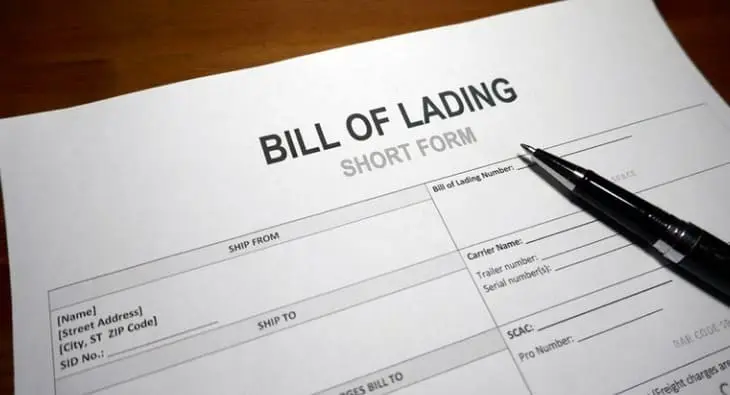
What is a Bill of Lading?
By admin
/ March 19, 2024
In the dynamic realm of international trade, the ‘bill of lading’ holds a pivotal role in ensuring the smooth transportation…
Read More

By Kanak Kansal, Researcher, Nitisara
Globally, pre-shipment planning begins with accurate product classification under the Harmonized System (HS) codes, which form the backbone of customs procedures in over 200 economies. Errors in HS coding account for nearly 30% of customs disputes worldwide (WTO Trade Facilitation Report 2022). Documentation such as the commercial invoice, packing list, certificate of origin, and transport documents (Bill of Lading/Air Waybill) remain universally required. For first-time traders, failure to comply with documentary standards results in average shipment delays of 7–10 days and additional costs of up to 5–6% of shipment value (ICC Trade Documentation Study 2023). This article covers critical initial aspects of planning and scheduling your shipment to another country. The below analysis dwells deeper into procedural aspects of important measures that need to be kept in mind for exporting and importing goods internationally.
For first-time traders entering global markets, pre-shipment cargo planning and adherence to export-import (EXIM) procedures are critical determinants of trade success. According to the World Bank’s “Doing Business” indicators (2020), the average time to comply with border and documentary export procedures is 25 hours in OECD high-income economies compared to 100+ hours in developing economies, underscoring the need for efficiency and planning. The UNCTAD Review of Maritime Transport (2023) highlights that logistics costs make up 10–12% of global GDP, with transport and customs inefficiencies causing delays that affect small exporters disproportionately.
Moreover, digitalization of EXIM procedures is reshaping pre-shipment planning. Platforms like the EU’s Customs Data Model, US Automated Commercial Environment (ACE), and Singapore’s TradeNet have cut pre-shipment processing times by up to 40%. However, only 62 countries have fully operational National Single Window systems, creating disparities for first-time traders in less digitized economies (WCO 2023). Insurance and cargo risk management are also key—data from the International Union of Marine Insurance (IUMI) shows that cargo claims due to improper packing account for 30–35% of total marine claims globally, emphasizing the importance of professional packing and compliance with Incoterms. For MSMEs and new entrants, pre-shipment financing and trade facilitation programs play a major role. The OECD estimates that 80–90% of world trade relies on trade finance, yet access remains limited for first-time exporters, especially in developing markets. Initiatives such as the Asian Development Bank’s Trade Finance Program (TFP), which supported over USD 10.5 billion in trade in 2022, demonstrate how targeted support can help small traders meet EXIM requirements and manage pre-shipment risks.
Pre-shipment cargo planning and adherence to Export-Import (EXIM) procedures are critical for first-time traders entering global markets. According to the World Bank’s Logistics Performance Index (2023), India ranks 38th out of 139 countries, reflecting improvements in infrastructure and customs efficiency but highlighting the need for capacity building among MSMEs and new exporters. For a first-time exporter, pre-shipment planning typically involves securing an Importer-Exporter Code (IEC) from the DGFT, finalizing product classification under the ITC-HS code, and ensuring compliance with export documentation such as the commercial invoice, packing list, and shipping bill. Data shows that over 60% of documentation-related delays for Indian MSME exporters occur at the pre-shipment stage, largely due to errors in customs filings, incomplete certificates of origin, and misclassification of goods (FIEO 2024 survey). Proper planning can reduce logistics costs significantly: as per ICRA, freight and logistics contribute nearly 14% of India’s GDP, almost double the global average of 8–9%. This makes efficiency in cargo consolidation, booking vessel or air cargo slots, and ensuring timely customs clearance crucial for competitiveness.
For first-time traders, government schemes such as Niryat Bandhu Scheme and the Indian Customs Electronic Gateway (ICEGATE) portal are designed to streamline EXIM processes. Yet, a Deloitte–FICCI 2023 report notes that nearly 40% of new exporters face shipment delays in their first year, often due to lack of awareness of pre-shipment compliance requirements like fumigation, quality certification, or insurance. Strengthening knowledge of these procedures and leveraging digital tools for cargo planning can reduce shipment delays by up to 25%, enhancing trust with international buyers and lowering working capital pressures.
In the wake of the COVID-19 slowdown, global trade has experienced a significant revival, characterized by increased cargo flow, higher transhipment volumes, and a rise in international port calls. This resurgence has introduced a greater focus on speed, efficiency, and compliance within cross-border logistics. As customs authorities around the globe implement more digital and data-driven processes, exporters are required to adjust their operations to satisfy contemporary port and regulatory standards. In this evolving landscape, pre-shipment readiness is no longer a choice but a necessity. From obtaining export finance and managing documentation to complying with Incoterms and collaborating with freight forwarders, every step in the pre-shipment process is vital for ensuring timely and cost-effective export execution. This guide provides exporters with a thorough overview of these essential procedural elements, assisting them in navigating international trade with enhanced clarity and confidence.
Any International trade can be classified under one of the three categories: export, import and cross trade. A sales contract (for export orders) and a purchase contract (for import orders) are formed accordingly. The primary stakeholders of an international trade include a consigner (shipper), consignee (receiver), freight forwarder (transportation and logistics provider), customs broker, bank, inspection company, insurance agency and the chamber of commerce (issuer of the certificate of origin). A commercial invoice is sent by the exporter to the importer which includes exporter and importer details, invoice number and date, purchase order or contract reference, description of goods, quantity of goods, unit price and total value, currency used, terms of delivery, terms of payment, shipping details, HS code etc.
It is an important document issued by the chamber of commerce to define the nationality of the goods being exported. This certificate is used by custom authorities in the importing country to determine duty rates, trade eligibility, and compliance with trade policies. It is of two types:
It is issued when there exists a trade agreement between the exporting and importing countries. It is useful for claiming all the tariff benefits under the Free Trade Agreements. [The website mentioned can be used to find trade agreements (if they exist) for a specified set of exporter and importer countries: https://findrulesoforigin.org/]
It is issued when the goods do not qualify for any trade related tariff concessions, In this case, the document simply works as a declaration of the goods being exported.
It is complementary to the commercial invoice sent by the exporter and elaborates on the physical contents of the shipment. It helps in custom clearance, inventory management and efficient cargo handling.
Incoterms (International Commercial Terms) are a set of standardized trade terms published by the International Chamber of Commerce (ICC) that define the responsibilities of buyers and sellers in international trade. These terms clearly outline who is responsible for shipping, insurance, customs clearance, and risk at each stage of the delivery process. For example, under FOB (Free on Board), the seller is responsible until the goods are loaded on the ship, while under CIF (Cost, Insurance and Freight), the seller also covers freight and insurance up to the destination port. Incoterms help avoid disputes, simplify documentation, and ensure legal clarity in cross-border transactions. The latest version, Incoterms 2020, includes 11 terms such as EXW, FCA, DDP, and CFR. Understanding and choosing the right Incoterm is essential for smooth international trade operations.
Selecting the right Incoterm is critical because it determines:
“Global courier companies experienced significant shipment losses due to concerns about a possible Teamsters union work stoppage, with about 1 million daily packages being diverted to competitors and an additional 200,000 daily parcels not entering the system because of lost sales due to shipper uncertainty.”
The exporter needs to complete some tasks before the actual shipment of goods to ensure that it meets both commercial and regulatory requirements. These “Pre Shipment activities” help avoid delays, penalties, or disputes during transit or delivery. Pre shipment tasks range from ensuring cargo readiness to acquiring the required license and compliance.
The step of cargo readiness encompasses the eligibility check of the goods being shipped. It ensures that the goods are manufactured, inspected, properly packed, labeled and ready for export. Compilation of the necessary documents including commercial invoice, packing list, certificate of origin, or any required inspection or compliance certificates are crucial for customs clearance and international payment. Booking of the transportation is done by the freight forwarder in accordance with shipping timeline and terms mentioned in the contract. Submission of the required documentation and filing export declarations with custom authorities is necessary to export the goods from the country of origin. A suitable cargo/marine insurance is purchased to protect the shipment from potential damage, theft, or loss during transit, especially if required under the agreed incoterms. Necessary licenses and permits are obtained to ensure compliance with both domestic export regulations and destination country requirements.
In essence, for first-time traders globally, structured pre-shipment cargo planning—covering documentation, compliance, packing, insurance, and financing—is indispensable to compete in international markets. Leveraging digital platforms, trade facilitation measures, and financial instruments not only reduces delays and costs but also enhances trust with global buyers, strengthening participation in cross-border trade.
The revival of global cargo movement and the increase in transshipment activity following 2021 indicate a renewed vigor in international trade.The rise in port visits and the implementation of digital customs processes have greatly enhanced turnaround times, making it more crucial than ever for exporters to be prepared before shipment.Effective pre-shipment planning which includes documentation, packaging, compliance, and financing, not only facilitates smoother export operations but also aligns with the changing infrastructure and procedural standards at ports and borders. As trade volumes expand and competition becomes fiercer, a solid grasp of pre-shipment processes is vital for capitalizing on the prospects of global trade while reducing delays and costs.
Stay informed through Nitisara Platform and Blogs and adapt to emerging trends are poised to thrive in the competitive global marketplace.- https://nitisara.org/category/blogs-updates/