What is a Bill of Lading?
By admin
/ March 19, 2024
In the dynamic realm of international trade, the ‘bill of lading’ holds a pivotal role in ensuring the smooth transportation…
Read More


By Ansh Agarwal, Researcher, NITISARA
With global maritime trade expected to hit $14 trillion by 2030, the pressure on shipping efficiency, safety, and environmental compliance has never been greater. Over 80% of global trade still moves via sea, but the industry faces mounting challenges: crew shortages, fuel costs, unpredictable routes, and rising pressure to reduce emissions. Autonomous shipping, once dismissed as speculative, is now being actively piloted across major shipping routes with early adopters reporting up to 54% fewer close encounters at sea and over $100,000 in annual fuel savings per vessel. This blog dives into what autonomous shipping really means for global trade today, separating hype from reality and answers the actual questions traders, fleet managers, and exporters are asking: Will it cut costs? Is it safe? What will it take to scale this technology across the real-world maritime supply chain?
For an industry that moves billions of dollars worth of goods every day, change in maritime logistics doesn’t come easily. Ships still spend weeks at sea, rely on manual bridge operations, and navigate unpredictable weather and traffic with limited real-time data. Yet in the background, a technological revolution is taking shape. New-generation cargo vessels are being fitted with sensors, cameras, and artificial intelligence platforms that help navigate, monitor risks, and make split-second decisions, reducing the reliance on human judgment alone.But for most exporters and importers, the question isn’t whether ships can be automated. It’s whether automation solves the real operational and commercial problems they face daily: delayed shipments, demurrage costs, fuel price volatility, and legal uncertainty. Traders are asking: Is this technology mature enough to trust? Will it change my freight costs or liability clauses? Can it protect my cargo and my balance sheet?This blog is not a tech deep dive. It’s a pragmatic look at how autonomous shipping is evolving and what it means for the people whose businesses depend on cargo moving safely, swiftly, and reliably across the seas.
This is the most common and legitimate concern from exporters, especially SMEs. While large shipping lines can afford pilot programs and innovation labs, traders are focused on outcomes. And the results so far are encouraging. Vessels equipped with AI-based navigation support systems have reported annual fuel savings between $80,000 and $120,000 due to optimized routing and fewer abrupt accelerations or emergency maneuvers. When scaled across a fleet, this can translate into millions in OPEX savings, which opens the door to more stable freight rates. But it’s not just fuel. These systems can detect high-traffic zones and congestion near ports, helping ships avoid last-minute rerouting or time-wasting anchoring. For traders, this could reduce:
Still, until these savings become widespread across vessels and carriers, the average trader won’t immediately see the benefit unless they specifically choose a forwarder or shipping line using smart navigation systems. Which means asking the right questions during carrier selection is key.
Traders are not just worried about cost, they’re also concerned about safety and predictability. No one wants their shipment stuck in the Suez Canal 2.0 because of a glitchy algorithm. The good news is, the tech isn’t about handing full control to machines. Most systems today are designed as “bridge assistants”, enhancing but not replacing human decisions. Real-world trials have shown a 30–50% reduction in close-proximity incidents when these systems are active. The AI observes vessel movement 24/7, even in poor visibility, identifying threats long before human operators can. It provides early alerts, optimized speed adjustments, and traffic analysis essentially acting as a digital second pair of eyes.
That said, safety is not just a technological issue it’s also about accountability. Traders still want to know who’s in charge when something goes wrong: the captain, the AI provider, or the shipping company. Right now, maritime law defaults to human accountability. But as automation deepens, this legal grey zone will need resolution especially before full autonomy becomes more common.
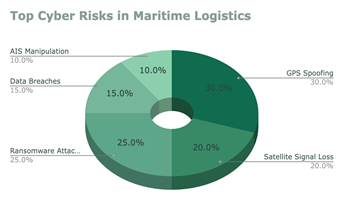
Autonomous systems rely heavily on real-time data streams from satellite GPS to weather updates and vessel traffic data. This makes them efficient, but also vulnerable. One growing concern is cybersecurity. If GPS can be spoofed or cloud feeds compromised, a vessel could be misrouted, delayed, or even steered into restricted waters. This is more than just theoretical. In 2023, several ports across Asia reported attempted digital interference with ship navigation systems, believed to be the result of state-backed hacking experiments. For high-value or sensitive cargo, this risk can’t be ignored. Traders and freight forwarders must start factoring digital integrity into vendor and route selection. Is the ship’s navigation system encrypted? Is the data stored redundantly? Is there a fail-safe if cloud connectivity is lost mid-ocean? These are no longer technical questions, they’re commercial risk considerations that affect delivery timelines and insurance eligibility.
Legal infrastructure is still catching up with technical progress. The International Maritime Organization (IMO) has begun drafting regulatory frameworks for MASS (Maritime Autonomous Surface Ships), but practical rules are scarce. What happens if a semi-autonomous ship makes a poor judgment call that results in cargo damage or delay?Currently, shipping contracts and insurance policies are vague when it comes to AI-assisted decision-making. Most continue to assign liability to the vessel operator. But that could change as autonomy scales especially if decisions are increasingly influenced (or even overruled) by AI algorithms. For now, traders should review force majeure clauses, demand clarity on navigation systems used, and request specifics on liability in case of AI-induced incidents. Legal due diligence can’t be an afterthought especially when automation introduces new kinds of operational risk.
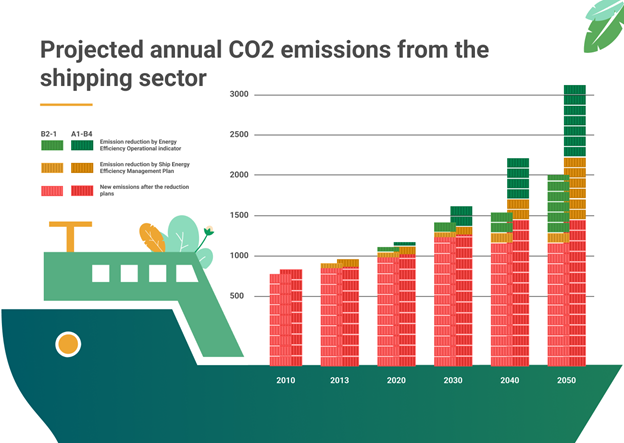
Autonomous shipping stands poised to redefine the maritime logistics landscape, offering transformative advantages in safety, efficiency, and sustainability. By minimizing human error—which accounts for nearly 75% of maritime accidents—autonomous vessels promise safer seas and lower insurance costs. Crew expenses, which make up 30–40% of a vessel’s operational budget, can also be significantly reduced through remote and automated operations. Moreover, AI-driven navigation and optimized routing could cut fuel consumption by 10–15%, directly reducing emissions and contributing to the industry’s decarbonization goals. Economically, the impact is profound: the global autonomous ships market is projected to reach USD 8.2 billion by 2030, growing at a CAGR of around 9–10%. Major maritime economies such as Japan, Norway, South Korea, and China are investing heavily in pilot programs and smart port ecosystems, signaling a shift toward data-driven and digitally connected maritime supply chains.
The current state of autonomous shipping reflects an industry in transition—from early-stage trials to limited commercial deployment. Several prototypes are already operational. The Yara Birkeland, launched in Norway, is the world’s first fully electric and autonomous container ship, designed to cut emissions by 95% and remove up to 40,000 truck journeys per year. Similarly, the Mayflower Autonomous Ship—a research initiative powered by IBM’s AI and edge computing—has successfully demonstrated transatlantic navigation without human intervention.
Technological advancement lies at the heart of this evolution. Modern autonomous vessels integrate radar, lidar, sonar, thermal imaging, and advanced camera systems to generate a 360° situational awareness. These inputs are processed by onboard AI and machine-learning algorithms, enabling real-time decision-making, obstacle detection, and optimized navigation. Connectivity technologies such as 5G, satellite communications, and digital twin systems allow for remote monitoring and diagnostics, ensuring operational reliability even in complex maritime environments.
The International Maritime Organization (IMO) categorizes Maritime Autonomous Surface Ships (MASS) into four key degrees of autonomy:
Between these extremes exist semi-autonomous models (SAS)—where human intervention supports automated systems during complex scenarios—and vessel platooning, where a lead ship guides several unmanned vessels in a coordinated formation. Crewed Electric Vessels (CEVs) represent another hybrid model, combining clean energy propulsion with partial automation for sustainable operations. Each model reflects a gradual evolution toward full autonomy, allowing operators and regulators to balance safety, technology readiness, and commercial viability.
Regulation remains one of the most critical enablers—and constraints—of autonomous shipping adoption. The International Maritime Organization (IMO) has taken a proactive stance, initiating the MASS Regulatory Scoping Exercise and developing a non-mandatory MASS Code, which will guide the experience-building phase (EBP) through 2025–2028. These frameworks address key challenges such as liability, crew certification, remote operator responsibilities, and cybersecurity.
Several nations have also created designated testbeds for autonomous ship trials:
For India, which handles 95% of its trade by volume via sea, autonomous technologies could revolutionize coastal and short-sea logistics, improve safety in congested routes, and align with the Maritime India Vision 2030 and Sagarmala objectives for digitalized and sustainable port operations.
As the maritime sector moves toward decarbonization and digitalization, autonomous shipping represents a convergence of AI, sustainability, and logistics efficiency. While challenges persist—particularly around cybersecurity, international regulatory harmonization, and liability—the trajectory is clear. The next decade will witness hybrid fleets combining remote-controlled, semi-autonomous, and fully autonomous vessels, integrated into smart ports and connected logistics ecosystems.
In conclusion, By 2035, autonomous shipping could reshape maritime trade economics, enabling 24/7 operations, optimized routes, zero-emission propulsion, and lower lifecycle costs—marking the dawn of a truly intelligent maritime era. Autonomous shipping is no longer a futuristic experiment. It’s happening and it’s solving real problems, from route inefficiency to fuel waste and crew fatigue. But the benefits won’t reach traders and cargo owners unless the technology is implemented alongside better contracts, clearer liability frameworks, and stronger digital protections. For exporters, importers, and logistics teams, the takeaway is clear: don’t ignore this shift. Understand how autonomy is evolving, engage with forwarders who use advanced systems, and ask the tough questions about safety, cyber risk, regulation, and ROI. The age of intelligent maritime logistics has arrived. It’s no longer about smart ships it’s about building a smarter trade ecosystem, one route at a time.
The views expressed do not represent the company’s position on the matter. Stay informed through Nitisara Platform and Blogs and adapt to emerging trends are poised to thrive in the competitive global marketplace. – https://nitisara.org/category/blogs-updates/