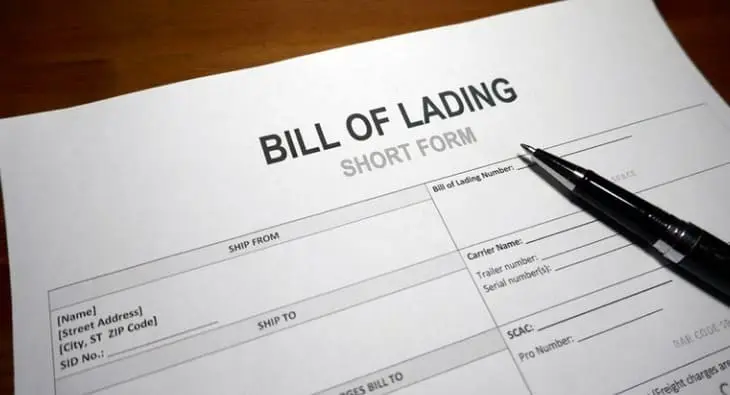
What is a Bill of Lading?
By admin
/ March 19, 2024
In the dynamic realm of international trade, the ‘bill of lading’ holds a pivotal role in ensuring the smooth transportation…
Read More


By Kanak Kansal, Researcher, Nitisara
Pre-shipment financing is a critical financial tool in international trade, enabling exporters to secure working capital based on confirmed export orders. This article explains the important procedural aspects of pre-shipment financing and also emphasises on the relevant terms required to understand the same.
Pre-shipment financing pertains to the short-term credit extended to exporters prior to the actual shipment of goods. This type of financing is essential for enabling exporters to acquire raw materials, produce goods, package them, and finalize all necessary documentation and logistics before dispatch. Given that international trade involves lengthy cycles and significant upfront expenses, pre-shipment finance guarantees that exporters can meet large orders without encountering liquidity challenges. The funding is typically provided against a confirmed export order or a letter of credit from an overseas buyer.
Banks and financial institutions, often supported by export credit agencies such as the Export Credit Guarantee Corporation (ECGC) in India, provide these loans at preferential interest rates. Depending on the terms of the agreement, pre-shipment finance may take the form of packing credit (in either rupees or foreign currency) and is generally reconciled once the goods are shipped and payment is received through post-shipment finance. Therefore, pre-shipment finance is crucial in the export process, effectively bridging the gap between order receipt and shipment execution. The important technical terms required to understand this process are also discussed below:
A Letter of Credit (LC) is a financial instrument issued by a bank that assures a seller (exporter) will receive payment from the buyer (importer), contingent upon the fulfillment of specific terms and conditions outlined in the LC.
An EEFC Account is a specific type of bank account held in foreign currency by resident Indian exporters with an authorized dealer (bank) in India. This account permits exporters to retain a portion of their foreign exchange earnings in foreign currency without the necessity of converting it into Indian Rupees (INR).

Figure 1: Illustration of a basic flow of pre-shipment financing
(source: https://www.adb.org/trade-supply-chain-finance-program/supply-chain-finance)
Pre-shipment export credit, commonly referred to as packing credit, is a form of working capital loan provided by banks to exporters. It facilitates the financing of activities such as purchasing, manufacturing, processing, and packing of goods intended for export. The loan is secured against an export order or a letter of credit (LC) received from a foreign buyer. This financial support allows exporters to prepare goods for shipment without utilizing their own funds and is generally offered in Indian Rupees.
The length of packing credit is determined by the characteristics of the goods and the time needed for procurement, processing, manufacturing, and shipping. There is no established standard duration; banks determine the suitable period based on the particular export transaction. However:
Banks provide packing credit either as a single payment or in installments, based on the production cycle and financial requirements of the exporter. Each packing credit facility is held in a distinct account to accurately monitor disbursements and repayments. Financial institutions may employ methods such as hypothecation or pledging of goods. It is crucial for banks to oversee:
When exporters obtain advance payments via instruments such as foreign cheques or bank drafts, banks may offer export credit at reduced rates after confirming:
Financial institutions may extend packing credit to manufacturer-suppliers or sub-suppliers that provide goods to export houses or trading companies. The stipulations include:
Deemed exports pertain to transactions in which goods remain within the country yet qualify for export advantages. Instances of this include provisions for projects funded by the World Bank. Financial institutions are permitted to offer concessional rupee export credit (both prior to and following the supply) for these transactions, as long as payments are conducted in foreign currency or from EEFC accounts, and the corresponding export benefits are accessible under the Exim Policy.
Different commercial banks provide different concessions to regular exporters depending upon their past exporting history. For example: Baroda Exporter Gold Card, Bank of India (BOI) – Exporters Gold Card, ICICI Bank – Exporters Gold Card Scheme, etc.
Export credit insurance (ECI) serves to safeguard exporters of goods and services from the risk of non-payment by international buyers. In essence, ECI significantly mitigates the payment risks linked to international trade by providing exporters with conditional assurance that they will receive payment if the foreign buyer fails to fulfill their payment obligations. In simpler terms, exporters can shield their foreign receivables from various risks that may lead to non-payment by overseas buyers. ECI typically encompasses commercial risks (including buyer insolvency, bankruptcy, or prolonged defaults/slow payments) as well as specific political risks (such as war, terrorism, civil unrest, and revolutions) that may lead to non-payment. Additionally, ECI addresses issues such as currency inconvertibility, expropriation, and alterations in import or export regulations. ECI can be provided on either a single-buyer basis or a portfolio multi-buyer basis, applicable for short-term (up to one year) and medium-term (one to five years) repayment durations.
This article doesn’t represent the company’s views or positioning. Stay informed through Nitisara Platform and Blogs and adapt to emerging trends are poised to thrive in the competitive global marketplace.- https://nitisara.org/category/blogs-updates/
https://www.adb.org/trade-supply-chain-finance-program/supply-chain-finance
https://www.trade.gov/report/trade-finance-guide
https://fieo.org/view_detail.php?id=0,22&d=179