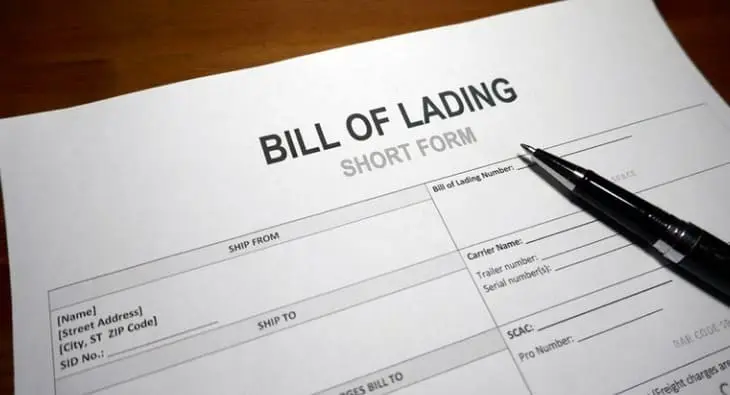
What is a Bill of Lading?
By admin
/ March 19, 2024
In the dynamic realm of international trade, the ‘bill of lading’ holds a pivotal role in ensuring the smooth transportation…
Read More

By Tanmay Goel, Researcher, Nitisara
India–UK bilateral trade was £42.6 billion in goods and services in 2024, including merchandise trade of £17.8 billion. Indian drug, textile, and engineering goods exports are required to undergo strict UK import regulations such as CE marking, UKCA requirement, and sector-specific quality standards 3. The new India–UK Free Trade Agreement has the potential to bring an end or reduce tariffs on over 90% of goods exchanged between the two countries, standardize, and simplify customs, providing a major boost to cross-border logistics.
India and UK have a historic and strategic trade partnership founded on complementary economies, shared language, and 40 years of synergistic cross-border business. From Indian medicine and cloth on British supermarket shelves to high-quality machinery and liquor moving in the opposite direction, the two nations depend on a delicate network of ports, logistics companies, and compliance measures to keep their commerce machinery running smoothly. With growing bilateral commerce volume, importers and exporters will have to acquire the ability to adapt to changing regulatory landscapes and consumers’ needs.
India-UK Bilateral Trade Growth (2014-2024), Source: Author’s own
Given the nature of the global economy today, which is highly competitive, Indian-UK supply chains are not commodities pipelines anymore—these are strategic trade development drivers. Exporters need to have in view UK import rules, conform to regulatory changes in the post-Brexit scenario, and redirect operations to fluctuating norms in safety, labeling, and documentation. In contrast, the proposed India–UK FTA will do away with historical trade tensions and bring in seamless supply chain management. However, issues like breakdowns in logistics, congestion at customs, and procedure incompatibilities pose major obstacles.
Indian UK exporters must abide by strict product standards and regulatory regimes, especially post-Brexit, which imposed new trading and customs habits. Compliance is facilitated by an initial appreciation of the industry-specific needs like CE marking, labeling needs, and product testing, the specifics varying depending on the nature of whether industrial equipment, consumer goods, foodstuffs, or pharmaceuticals are being exported 3. Exporters tend to outsource certifying bodies and third-party auditors to certify compliance in the UK. Documentation is crucial; correct commercial invoices, certificates of origin, and health or phytosanitary certificates are required to enable easy customs clearance 4. Indian exporters are also supported by trade promotion councils, customs brokers, and compliance experts in handling complexities of rules. Use of Authorized Economic Operator (AEO) status, where possible, allows quick clearances through mutual recognition. Increasingly, digital platforms are being used for loading and sharing documents long in advance to prevent delay.
The India–UK Free Trade Agreement (FTA), signed on 06 May 2025, has the potential to redesign supply chains by reducing tariffs, streamlining regulatory hurdles, and making bilateral investments easier. Reduced duty rates will make UK exports to India and vice versa more price competitive, which can contribute to trade volume as well as induce businesses to expand activities. From the supply chain perspective, the FTA has to rationalize customs, promote electronic trade facilitation, and harmonize technical specifications, reducing border frictions. This increased predictability allows businesses to make smarter inventory, transportation, and logistics decisions. It will also have the effect of promoting greater interdependence in sectors such as pharmaceuticals, automobiles, renewable energy, and technology, where efficient cross-border supply chains are crucial. The agreement can include mutual acceptance of certifications and professional qualifications, which allows for rapid compliance and less paper. The FTA would also promote investment in warehousing facilities as well as joint ventures to increase connectivity.
India-UK FTA Tariff Reductions showing significant decreases in tariffs across key product categories, Source: Author’s own
Although the trade relationships between India and the UK are relatively developed, India–UK supply chains also experience some congestion in logistics that can affect punctuality and cost. Some examples include port congestion during rush hours or during periods of regulation changes like post-Brexit. It creates long waiting times for customs clearance and cargo unloading. Incompatibility of labelling or documentation procedures is also a concern which can lead to delay or rejection of cargo at the inspection level. Antwerp and Rotterdam are great examples for port congestion. Prior to Brexit, Antwerp and Rotterdam were major gateways for UK–EU trade, handling much of the container and bulk cargo that was bound to the UK. But Brexit in 2020 intervened into established supply chains. The re-establishment of customs declarations, border controls, and phytosanitary checks resulted in massive bottlenecks at these ports, which were not originally designed for the new regulatory framework. The port congestion and increased dwell times at Rotterdam and Antwerp made shipping lines and hauliers reconsider the logistics route to prevent delay and increased cost.
Port Congestion Before and After Brexit, Source: Author’s own
Certain exporters use end-to-end computerized logistics platforms with online tracking, computerized documentation, and early warning systems for potential future disruption. Coordination by seasoned freight forwarders and customs brokers streamlines procedural differences and provides fallback planning. Furthermore, the majority of the exporters these days use third-party logistics providers (3PLs) who have both Indian and UK operations as a method to ensure consistency and dependability. Warehousing near major ports and airports is also used as a shock-absorber to adjust to delays and ensure timely transportation. Frequent communication between the governments and trade associations has also ensured rapid customs clearances and faster dispute resolution. The UK also recently struck a major agreement with the EU aimed at improving trade, relaxing border checks, and improving cooperation on security, energy, and defence. The agreement included a permanent SPS deal to reduce food trade red tape, restored access for UK agrifood exports, protection for British steel and fishing, and closer emissions trading links to avoid EU carbon taxes. The deal also enhances travel ease, justice data sharing, and opens talks on youth mobility, while maintaining Brexit red lines on the single market, customs union, and free movement.
In the example of Antwerp and Rotterdam discussed earlier, the Port of Dunkirk and the Port of Felixstowe became alternative gateways that could divert traffic. Felixstowe, which was already the UK’s biggest container port, invested in more advanced customs technology and enhanced rail connections to inland distribution centers. The UK government also funded post-Brexit port transformation, which assisted ports like Felixstowe in improving facilities to accommodate new customs and border processes. At the same time, Dunkirk Port in France actively readjusted to take in diverted UK-bound and UK-sourced trade. Dunkirk developed its roll-on/roll-off (RoRo) services to target specifically UK hauliers looking for an alternative to Calais. In 2021, Dunkirk established a “Green Lane” priority customs corridor for UK goods, cutting significantly the processing times for perishables and time-sensitive shipments.
In conclusion, India’s shifting trade link with the UK is a measure of the degree to which extended supply chains have become forces behind economic ties. Indian exporters navigating the intricate UK regulatory environment through their ability to adapt using compliance, better documentation, and better logistics coordination has proven key to market success. India–UK Free Trade Agreement injects further momentum, with possible tariff cutting, simplification of customs procedures, and greater predictability across borders. However, port bottle necks, non-synchronized standards, and post-Brexit process complexities still result in supply chain inefficacy. Addressing these issues entails not only policy-level coordination but also continued cooperation among exporters, logistics providers, and regulatory experts.
References:
The views expressed do not represent the company’s position on the matter. Stay informed through Nitisara Platform and Blogs, and adapt to emerging trends that are poised to thrive in the competitive global marketplace. – https://nitisara.org/category/blogs-updates/