What is a Bill of Lading?
By admin
/ March 19, 2024
In the dynamic realm of international trade, the ‘bill of lading’ holds a pivotal role in ensuring the smooth transportation…
Read More


Author: Tanmay Goel, Researcher at Nitisara
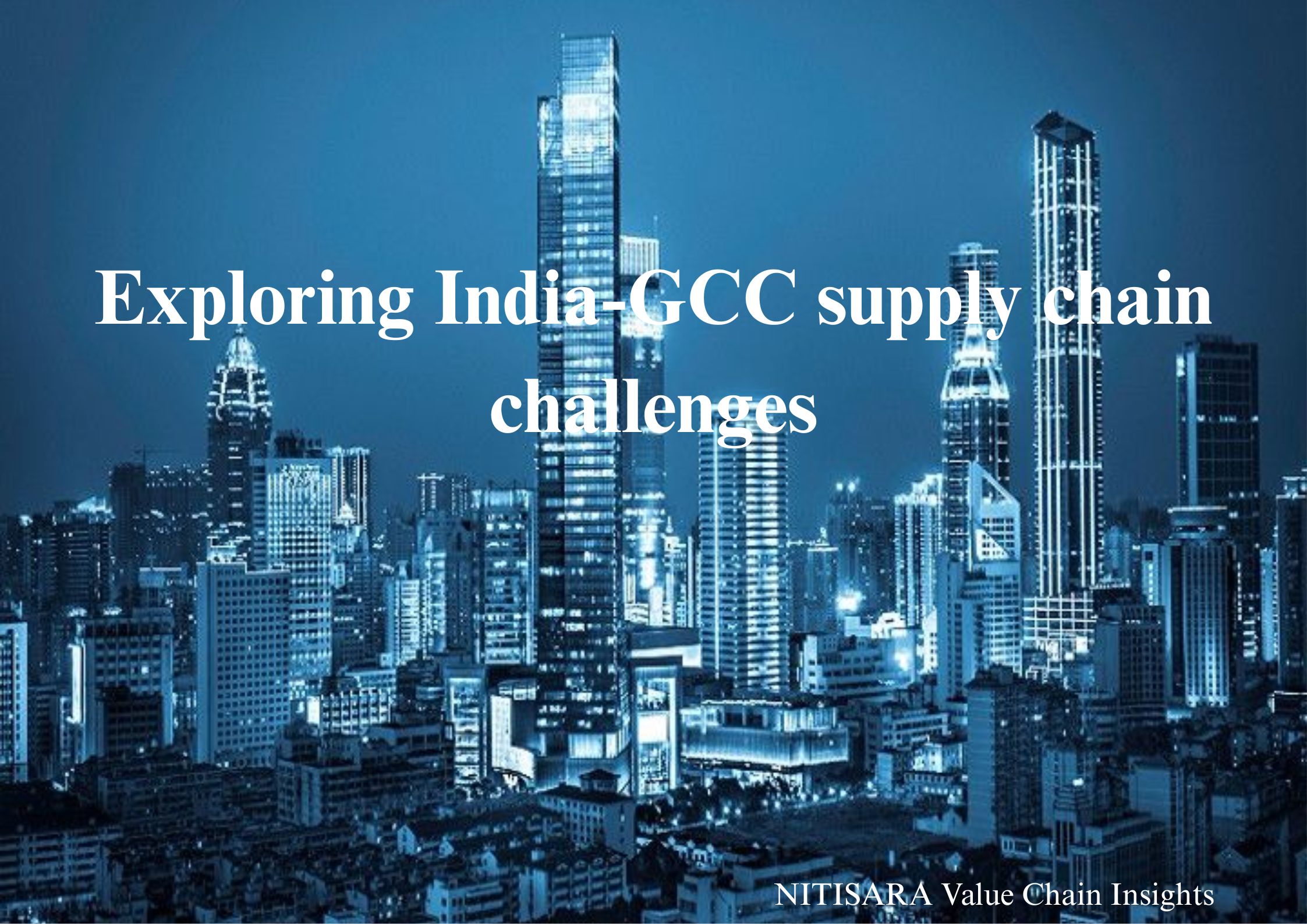
India-GCC trade was valued at $161.59 billion in FY 2022-23, and the Gulf Cooperation Council is now India’s biggest world trading bloc1. The United Arab Emirates alone has accounted for nearly $84 billion, followed by Saudi Arabia at $43 billion1. The structure of the trade varies from petroleum and fertilizers to foodstuffs, textiles, and machinery and is diverse and rising. But making this cross-regional commerce possible is an enormous, hidden network of supply chains — shipping routes, customs operations, ports, and logistics hubs.
India and the Gulf Cooperation Council (GCC) countries — Saudi Arabia, the UAE, Qatar, Oman, Bahrain, and Kuwait — have established strong economic and diplomatic ties over the course of the past few decades. All these linkages go well beyond trade, including energy cooperation, labor remittances, investment, and strategic discussions. Today, there are over 9 million Indians living and working in the GCC, and the region is one of India’s largest suppliers of crude oil and one of its largest markets for goods such as rice, meat, engineering goods, and pharmaceuticals 2. India-GCC Free Trade Agreement is also in the pipeline, which says much for cooperation in the future.
Indian Diaspora Distribution Across GCC Countries (in millions), Source: Author’s Own
But as volumes are gigantic, few have any idea how much is at stake in terms of strength and capability of supply chains that connect such locations. Mundra, Nhava Sheva, Jebel Ali, and Dammam ports themselves handle millions of containers each year, shipping commodities thousands of kilometers by road and sea. Shipping frequency, the intensity of customs checks, warehouse space, and electronic tracking devices all play a role in how quickly and dependably trade moves. Indo-GCC trade starts with an understanding of how these supply chain tools actually operate for policymakers and firms, and possibly for interested onlookers.
Container Throughput Comparison: Jebel Ali vs JNPT (Million TEUs), Source: Author’s Own
Port congestion is one of the key issues, at least in high-traffic Gulf ports like Jebel Ali or Indian ports like Nhava Sheva (JNPT), and can create time delays in loading and unloading cargo. Differences between India and certain of the GCC states in terms of customs procedures and documentation needs can also lead to inefficiencies, particularly for firms that are not experienced in regional trading patterns. Furthermore, the region’s heavy reliance on sea transport means that any disruption at sea, for instance, because of weather, labor disputes, or geopolitical issues, can have a disproportionate effect. But there is another issue of the lack of standardized regulatory procedures in the GCC, and thus it is tough for Indian exporters to compete with various regulations related to packaging, marking, and product certification. Insufficient inland transportation capacity in certain Gulf nations and steep logistics costs caused by fluctuating fuel prices further tightened supply chains. These logistics bottlenecks are further compounded by slow uptake of electronic solutions in certain areas of trade.
India and GCC lockdowns amidst the pandemic peak caused shortages of manpower at ports, warehouses, and factories, thus reducing cargo handling and output. Seaborne shipping also suffered shortages of containers and delays, resulting in higher freight rates and extended journey times. Medical screenings of crew members and global border shutdowns also led to delay in shipments, specifically to life-sustaining commodities such as medicine and food. Grounding of passenger flights—historically used for light, time-critical loads—also impacted other businesses that utilize rapid delivery. On the demand side, uncertainty in the market resulted in irregular order volumes, developing inventory planning challenges to importers and exporters. But the crisis also accelerated the adoption of digital logistics platforms, remote customs clearance, and touchless delivery operations in both markets.
India and the GCC need to focus on diversification and integration of technology to make supply chains resilient and sustainable. The most important thing to do is invest in multi-modal infrastructure for logistics that reduces over-reliance on a single mode of transport or port. It means investing in developing rail, road, and air cargo infrastructure and harmonizing them with sea freight in an integrated manner. Digitalization is the other most significant focus area—use real-time track and trace, AI-based forecasting, and blockchain for safe documentation to make supply chains more reactive and transparent to disruptions. Both parties should also try to align customs formalities and establish common logistics standards to reduce frictions in cross-border trade. In sustainability, incentivizing sustainable logistics such as low-carbon freight, solar-powered warehouses, and routing cargo for optimal efficiency can reduce environmental impact while optimizing efficiency. Local production and local procurement wherever possible can also insulate supply chains from outside disruptions. In addition, public–private partnerships and cooperative capacity-building can optimize innovation and trust in the system.
In conclusion, India–GCC relations are at the cusp of take-off, and supply chains provide the foundation for this emerging relationship. With levels of trade still on the increase in the energy, foodstuffs, pharmaceuticals, and building material sectors, it has become a significant part of economic relations to be able to transport freely between India and the Gulf. While such issues as port congestion, regulatory disparities, and external interference are still very much on the scene, there has been willingness to cooperate and adapt on both sides. The growth in use of digital logistics, focus on reforms in trade facilitation, and investment in infrastructure are all pointers to some point in the future when Indo-GCC supply chains are not only fast but smart and resilient. Furthermore, the common push for economic diversification—India through Make in India and the GCC through Vision 2030 drives—offers fertile soil for cooperation, logistics innovation, and supply chain transformation. In the future, greater excellences of trust, transparency, and technological integration will be needed to craft supply chains capable of riding the world’s uncertainties and fulfilling long-term trade ambitions. In this emerging paradigm, India and the GCC are able to co-create together a sustainable, agile, and mutually beneficial trading ecosystem.
The views expressed do not represent the company’s position on the matter.
Stay informed through Nitisara Platform and Blogs and adapt to emerging trends are poised to thrive in the competitive global marketplace. – https://nitisara.org/category/blogs-updates/
References:
https://ijeks.com/wp-content/uploads/2024/02/IJEKS-3-01-004.pdf
https://www.eoiriyadh.gov.in/page/india-gcc-relations/